Roderick Anderson was raised in Nebraska and Northern Wisconsin, and has worked in engineering and business across many parts of the United States and the world, most recently as Deputy Inspector General for the U.S. Department of Commerce.
He and his wife have ten children. He developed this site from the conviction that young minds can piece together a remarkably clear understanding of their country's and the world's history when provided with a wide variety of quality, age-appropriate materials.
A Curated Reading Guide
The Young Historian's Bookshelf
Historical books worth a place in a young reader's library
Grades 4 – 8 · Ages 9 – 14
Curated by
A resource for parents and students who know history runs deeper than textbooks. Each book below was chosen for its quality, historical value, and staying power with young readers.
Curator's Notes
When our oldest children were young, we used to sometimes take them to libraries. It didn't take long to realize that many notable historical books for young readers were no longer there in the libraries. So I began building a library covering the people and events that I thought were essential for them to understand. It took some effort to put the list together, so I thought I would make it available to others.
You'll notice I've included some works of historical fiction at the end of some of the sections. For readers who prefer narrative over straight history, these can serve as an entry point into the period. Some works earned their place because the history they convey is too rich to overlook regardless of the form.
Many of these works were written in the mid-twentieth century, though the list draws from earlier times and modern times as well. In those decades, American historians and authors prioritized writing biographies of individual Americans for young readers, and they did so in such numbers that even lesser-known figures received serious attention, creating a valuable trove of narrative history for those in future generations.
Most of the books here address North American history directly, with others included for the light they shed on events that influenced it.
Finding These Books
In Print: About a quarter of them are still in active print from major publishers and tend to have both Kindle and audiobook editions. That group includes the Newbery Medal winners, the books by Steve Sheinkin, and most titles published after 1990.
Not in print, but still easy to find: Approximately another quarter of these books went out of print in the mid-20th century but have been digitized and are available as inexpensive or free Kindle editions through Project Gutenberg or public domain publishers.
Not in print and not as easy to find: About half of these works went out of print and were never digitized commercially. This is where your tenacity comes into play. While used bookstores are always an option, the easier avenue for locating them is usually AbeBooks, Alibris, or eBay. BookFinder.com is an aggregator that scours other websites in an effort to find the lowest price.
The search for the right books is part of the enjoyment of having a great library for young readers. A couple of books from each section is a great start!
Ancient World
Greece, Rome, Persia and the classical world
01
The Exploits of Xenophon
Geoffrey Household · 1955
Household retells the story of the Ten Thousand, the Greek mercenary army that marched deep into Persia to fight for the Persian prince Cyrus, who then died in battle, leaving them stranded. The survivors elect their own officers to try to fight their way home across a thousand miles of hostile territory. The prose is modern without losing the texture of the ancient world, and the military adventure is fascinating. A capable telling of a great true story. Some students may be inspired by it to read some of Xenophon's writings.
Gr. 5–7History / Retelling~180 pp.
02
Alexander the Great
John Gunther · 1953
Gunther's biography of Alexander moves from his boyhood under Aristotle through the Persian campaigns, the conquest of Egypt, the founding of Alexandria, the march to India, and his death at thirty-two in Babylon. Gunther was one of the great journalists of his generation and writes biographies the way he wrote his famous Inside books: vivid, factual, and moving fast. This is a strong ancient world biography written for young readers.
Gr. 5–7Biography~180 pp.
03
Julius Caesar
John Gunther · 1959
Gunther brings the same journalist's eye to Caesar that he brought to Alexander the Great, covering his rise through Roman politics, his military campaigns in Gaul, his crossing of the Rubicon, and the latter part of his life with clarity and pace. The book shows Caesar's ambition and his genius in equal measure. Gunther's portrait of the late Roman Republic, its corruption, its violence, and its extraordinary political energy gives students a layered sense of the world Caesar lived in.
Gr. 6–7Biography~210 pp.
04
The Bronze Bow
Elizabeth George Speare · 1961
Set in first-century Judea, this Newbery Medal novel follows a young rebel who burns for revenge against Roman occupiers, until an encounter with Jesus of Nazareth reshapes everything he thought he knew. Speare brings the ancient world to life with dusty roads, fierce loyalties, and moral questions that linger. One of the finest pieces of ancient historical fiction written for this age group.
Gr. 5–7Historical Fiction255 pp.
05
The Eagle of the Ninth
Rosemary Sutcliff · 1954
Sutcliff's novel follows a young Roman centurion who travels north into unconquered Scotland to recover the lost eagle standard of the Ninth Legion, which vanished with 4,000 men somewhere beyond Hadrian's Wall. The friendship between the Roman soldier and his freed British slave is an endearing aspect of the story. Sutcliff's prose is rich and unhurried, and her depiction of Roman military culture is very authentic. This is the first in a series of interconnected Roman Britain novels, each serving as its own history lesson.
Gr. 6–8Historical Fiction255 pp.
06
Black Ships Before Troy
Rosemary Sutcliff · 1993
Sutcliff's masterful prose retelling of The Iliad distills Homer's epic into a narrative young readers can follow without losing the weight, tragedy, or grandeur of the original. Alan Lee's illustrations give the pages an ancient, elemental atmosphere, and the deaths of heroes still land with full force. Excellent preparation for reading Homer's works a few years later.
Gr. 5–7Myth / Retelling128 pp.
07
Quo Vadis
Henryk Sienkiewicz · 1895
Sienkiewicz's Nobel Prize-winning novel is set in Nero's Rome and follows a Roman military officer whose love for a Christian woman draws him into the persecuted community of early Christians, against the backdrop of the burning of Rome and the imperial court's spectacular corruption. The historical research is formidable, and the picture of Rome at its most decadent and dangerous stays with the reader long after reading the book. A rewarding read for strong eighth graders; an abridged edition is available as well.
Gr. 8Historical Fiction417 pp.
Medieval & Renaissance
The centuries that built the foundations of the modern world
01
Genghis Khan and the Mongols
Harold Lamb · 1954
Genghis Khan rose from poverty and obscurity on the Mongolian steppe to build the largest contiguous empire in history, conquering China, Central Asia, Persia, and even pushing into Eastern Europe within his lifetime. Lamb was a popular historian and a respected scholar of Central Asian history, and this work brings his storytelling gifts to a younger audience without losing the sweep and drama of the subject. Few figures of the medieval era directly affected the lives of as many people as Genghis Khan.
Gr. 5–7Biography182 pp.
02
The Crusades
Anthony West · 1954
West covers the two centuries of Crusading expeditions to the Holy Land, from Pope Urban II's call to arms in 1095 through the fall of the last Christian strongholds at the end of the 13th century. The book follows the major campaigns and the remarkable figures on both sides, including Richard the Lionheart and Saladin, and gives a clear account of why the Crusades ultimately failed to achieve their objectives while permanently reshaping relations between the Christian and Islamic worlds. A broad account of one of the most consequential and complex chapters of the medieval period.
Gr. 4–7History185 pp.
03
The Magna Carta
James Daugherty · 1956
Daugherty's account traces the events leading to Runnymede in 1215, when the English barons forced King John to set his seal to the document that planted the first formal limits on royal power in the English-speaking world. The book follows the Magna Carta's long afterlife as well, showing how a feudal bargain between a king and his nobles became the foundation of constitutional government on both sides of the Atlantic. A compelling introduction to the medieval world and to the idea that the freedoms Americans take for granted have a long and contested history behind them.
Gr. 5–7History~180 pp.
04
Joan of Arc
Nancy Wilson Ross · 1953
Ross's biography follows Joan from her village childhood in Domrémy through her remarkable campaign to raise the siege of Orléans and crown the Dauphin at Reims, her capture, her trial for heresy, and her end at Rouen at nineteen. The book is written with care for the historical record and conveys both the extraordinary nature of what Joan accomplished and the political forces arrayed against her. One of the most compelling lives of the entire medieval period, and this account does it justice for young readers.
Gr. 5–7Biography~180 pp.
05
St. Thomas More of London
Elizabeth Ince · 1954
Thomas More was one of the most brilliant men of his era. He was a scholar, lawyer, and humanist who rose to become Lord Chancellor of England under Henry VIII, then resigned and was executed rather than acknowledge the king as head of the Church. His story is one of the great moral dramas of the Renaissance, and Ince's biography follows him from his London boyhood through Oxford, his legal career, his friendship with the king, and his final years of imprisonment in the Tower. This book is written with Catholic readers in mind, but almost everyone will appreciate such a life and such conviction.
Gr. 5–7Biography164 pp.
06
The Galleys at Lepanto
Jack Beeching · 1982
Beeching's account of the Battle of Lepanto in 1571 covers the complex political maneuvering among Venice, Spain, and the Papacy that produced the Holy League, and the extraordinary clash of some 400 oared warships in the Gulf of Patras that halted Ottoman expansion into the western Mediterranean. Beeching treats the Turkish commanders and the Ottoman strategic perspective with the same seriousness he gives the Christian side, and the result is a genuinely balanced account of one of the most dramatic naval battles ever fought. An adult-level book but accessible and short enough to work well as a stretch read for motivated seventh and eighth graders,.
Gr. 7–8History~280 pp.
07
A Man for All Seasons
Robert Bolt · 1960
Robert Bolt's play follows Thomas More through his friendship with Henry VIII, his resignation as Lord Chancellor, his imprisonment in the Tower, and his execution, tracing the life of a man who quietly refused, at great personal cost, to say what the king wanted him to say. The dialogue is sharp and the moral questions are clear: what does a man owe to his conscience, and what does he owe to his sovereign or the political authority of his country? Winner of the Tony Award for Best Play and the basis for the Academy Award-winning film, it is sometimes used in high school classrooms and holds up well as both literature and history.
Gr. 8Historical Drama163 pp.
08
The Two Trumpeters of Vienna
Hertha Pauli · 1961
In 1683 the Ottoman army besieged Vienna with the largest Muslim force ever to threaten the heart of Europe. The city's survival depended on holding long enough for the Polish king Jan Sobieski to arrive with his relief army. Pauli tells the story through two young trumpeters stationed in St. Stephen's Cathedral, whose signals coordinated the city's defense and whose counterparts on the city walls became part of the legend of the siege. A memorable introduction to an episode of European history that most American students don't encounter, but that helped shape the modern world.
Gr. 5–7Historical Fiction~180 pp.
09
If All the Swords in England
Barbara Willard · 1961
Set in 12th-century England during the conflict between King Henry II and Thomas Becket, this novel follows two boys on opposite sides of the quarrel, one serving the king's household and one attached to the Archbishop, as the struggle between royal power and church authority moves toward its violent resolution at Canterbury Cathedral. Willard writes with a medievalist's care for period detail and a novelist's instinct for the moral weight of events, and the portrait of Becket himself is detailed and nuanced. An excellent complement to the other medieval entries and an introduction to one of the defining church-state confrontations of the Middle Ages.
Gr. 5–7Historical Fiction~190 pp.
10
Adam of the Road
Elizabeth Janet Gray · 1942
Eleven-year-old Adam, son of a wandering minstrel in 13th-century England, loses both his father and his dog in the same day and must make his way alone through fairs, monasteries, and manor houses across the medieval landscape. This Newbery Medal winner doubles as a colorful tour of medieval English society, with merchants, pilgrims, lords, and scholars all appearing. The reader becomes immersed in the time period.
Gr. 5–7Historical Fiction320 pp.
11
The Trumpeter of Krakow
Eric P. Kelly · 1928
A Polish family flees to 15th-century Krakow carrying a dangerous secret. A great jewel is connected to legends of alchemy and a mysterious trumpet call in this atmospheric Newbery Medal winner. Kelly spent years in Poland and the texture of medieval Slavic city life is vivid. An excellent look into a chapter of European history that is rather unknown outside of Poland.
Gr. 5–7Historical Fiction215 pp.
12
Men of Iron
Howard Pyle · 1891
A young man trains as a knight in 15th-century England, determined to restore his father's honor after a treasonous accusation. Pyle was America's great illustrator of the Middle Ages and wrote this novel with the same meticulous love of heraldry, chivalry, and tournament pageantry that fills his paintings. The book is well-researched and the details of knightly training are memorable. But it's mainly for those with an interest in this era and subject.
Gr. 5–7Historical Fiction328 pp.
13
The Door in the Wall
Marguerite de Angeli · 1949
A young noble in 14th-century England is struck by illness and left unable to walk, then cared for by monks who teach him that every obstacle has a door in the wall, if you look for it. This Newbery Medal winner is short enough for strong fourth graders but deep enough for older readers, with authentic period detail and emotional wisdom. Courage in the face of suffering is handled well.
Gr. 4–6Historical Fiction121 pp.
Colonial America
The colonies, the settlers, and the world they built before the Revolution
01
The Story of Pocahontas
Shirley Graham · 1953
Graham's biography covers the full scope of Pocahontas's extraordinary life, from her childhood in the Powhatan Confederacy through her role in the survival of Jamestown, her capture by the English, her conversion and marriage to John Rolfe, and her death in England at barely twenty-one. Graham resists both the romantic legend and dismissive revisionism, treating Pocahontas as a young woman of intelligence and courage navigating two colliding worlds. A thoughtful entry point for learning more about the earliest English colonial period and the Powhatan people.
Gr. 5–7Biography~180 pp.
02
The Landing of the Pilgrims
James Daugherty · 1950
Daugherty's account of the Pilgrims follows the Mayflower crossing, the first winter at Plymouth, and the early years of the colony through the eyes of the participants, drawing on primary sources including William Bradford's journal. The writing has the energy of Daugherty's illustration style, and the hardship and faith of the colonists come through clearly. A strong starting point for the colonial period that reads more like lived experience than a summary of events.
Gr. 4–6History~160 pp.
03
North American Martyrs
Milton Lomask · 1956
Lomask tells the story of the eight Jesuit missionaries martyred in the wilderness of New France between 1642 and 1649, with Jean de Brébeuf and Isaac Jogues at the center. Brébeuf spent years living among the Huron, mastering their language and customs, before being captured and killed by the Iroquois with a courage that stunned his tormentors. Jogues had already survived capture, mutilation, and enslavement before returning voluntarily to the mission field and meeting his own death. The book opens a window onto the French colonial world and the Iroquois-Huron conflict that shaped the history of northeastern North America, and does so without softening what the missionaries endured or romanticizing the world they entered. A valuable complement to early colonial accounts that focus on the English colonies.
Gr. 6–8Biography / History~185 pp.
04
Evangeline and the Acadians
Robert Tallant · 1957
In 1755 the British expelled the French-speaking Acadian population from Nova Scotia in one of the most sweeping forced relocations in North American colonial history, scattering thousands of people across the Atlantic world. Tallant tells their story through the lens of Longfellow's famous poem while grounding it in the actual historical events, giving young readers both the emotional power of the legend and a clear understanding of what actually happened. A memorable introduction to the French colonial presence in North America and its violent end. Understanding the Acadian story also provides useful background for understanding the origins of the Cajun people of Louisiana, where many Acadian exiles eventually settled.
Gr. 5–7History~185 pp.
05
George Washington: Frontier Colonel
Sterling North · 1957
North focuses on the young George Washington's early military career in the French and Indian War, when he led Virginia militia through the Ohio wilderness, survived Braddock's disastrous defeat, and developed the leadership qualities that would define him two decades later. This is the less well-known Washington, a frontiersman in his twenties learning hard lessons about command, wilderness survival, and British military arrogance. A revealing look at the making of a man before he became well known.
Gr. 5–7Biography~185 pp.
06
Ben Franklin of Old Philadelphia
Margaret Cousins · 1952
Cousins's biography follows Franklin from his Boston childhood through his years as a printer and writer in Philadelphia, his scientific experiments, his diplomatic career in London and Paris, and his role at the Constitutional Convention — the full sweep of one of the most remarkable lives in American history. The book is The book is written with warmth and an affection for its subject, and the portrait of colonial Philadelphia that emerges is as picturesque as the man himself.
Gr. 4–6Biography~192 pp.
07
Ben Franklin: Inventing America
Thomas Fleming · 1973
Fleming's biography covers Franklin's extraordinary life as printer, scientist, satirist, diplomat, and founding father. He gives attention to the way his curiosity about the natural world and his genius for practical application were two expressions of the same mind. Fleming is good at conveying why Franklin's European diplomacy during the Revolution was as essential to American independence as any battlefield victory. A good choice for students ready for a full look at Franklin's remarkable life.
Gr. 5–7Biography~210 pp.
08
Abigail Adams: Girl of Colonial Days
Jean Brown Wagoner · 1949
Wagoner's biography follows Abigail Smith Adams from her Massachusetts girlhood through her marriage to John Adams and the early years of the Revolution, capturing the education she gave herself through relentless reading in an era when girls were often not expected to be educated. He conveys how thoroughly Abigail's intellectual partnership with John shaped his thinking, and why her famous "remember the ladies" letter was not a passing remark but the expression of a carefully considered position. A worthwhile introduction to her remarkable life.
Gr. 4–6Biography~192 pp.
09
Martha Washington
Jeannette Nolan · 1960
Nolan's biography of Martha Washington traces her life from her Virginia childhood through her two marriages, first to Daniel Parke Custis, then to George Washington, and her years at Valley Forge and Mount Vernon, where she served as the indispensable partner to the general and first president. The book provides a portrayal of Martha as a figure of substance and will rather than just a presence beside her famous husband. It gives students a sense of what it meant to be the partner of a man at the center of a nation's founding, with all the sacrifice and steadiness that required.
Gr. 5–7Biography~185 pp.
10
The Witch of Blackbird Pond
Elizabeth George Speare · 1958
When sixteen-year-old Kit Tyler arrives from Barbados to live with Puritan relatives in 1687 Connecticut, her world of warmth and color collides head-on with a rigid, suspicious community where friendship with the wrong person can mean a witch trial. Speare won a second Newbery Medal for this gripping examination of conformity, courage, and the cost of thinking differently. The historical atmosphere is well done and the characters are memorable and compelling.
Gr. 6–8Historical Fiction276 pp.
11
Calico Captive
Elizabeth George Speare · 1957
Based on a real 1754 captivity narrative, young Miriam Willard is taken by Abenaki raiders and marched to French Montreal, where she must navigate an alien city while hoping for ransom back to her family. Speare's narrative carefully describes the cultural collision between Puritan New England, French Catholic Canada, and Native life. A lesser-known gem from one of the finest American historical novelists for young readers.
Gr. 6–8Historical Fiction274 pp.
12
To Have and to Hold
Mary Johnston · 1900
Set in 1621 Jamestown, a soldier who buys a bride-ship colonist discovers she is actually a fugitive from the English court, and complications spiral into adventure. Johnston depicts the early Virginia colony's politics, starvation, and desperate improvisation. The plot moves fast enough to keep mature readers fully engaged. A demanding but rewarding read for seventh and eighth graders ready for something more ambitious.
Gr. 7–8Historical Fiction397 pp.
13
The Courage of Sarah Noble
Alice Dalgliesh · 1954
Based on a true story, eight-year-old Sarah accompanies her father alone into the Connecticut wilderness in 1707 to cook for him while he builds a cabin, then is left in the care of a Native American family when he returns for the rest of their family. Short and spare, this book reads beautifully aloud to younger students and depicts real courage without romanticizing danger or the frontier. A good starting point for colonial American study.
Gr. 3–4Historical Fiction54 pp.
The American Revolution
The ideas, sacrifices, and figures driving the founding of a nation
01
Ethan Allen and the Green Mountain Boys
Slater Brown · 1956
Ethan Allen and his irregular Vermont militia seized Fort Ticonderoga from the British in the opening months of the Revolution, supplying the cannons that eventually forced the British out of Boston, and Brown's biography captures both Allen's outsized, brawling personality and the genuine strategic importance of what he accomplished. The Green Mountain Boys themselves were as colorful a fighting force as the war produced, and the Vermont frontier world they came from is rendered with real texture. A well-written and enjoyable depiction of a figure worth knowing about.
Gr. 5–7Biography~185 pp.
02
The Swamp Fox of the Revolution
Stewart Holbrook · 1959
Francis Marion conducted the guerrilla campaign in the South Carolina backcountry that kept the Revolution alive in the South after the fall of Charleston, and Holbrook's biography fleshes out what is usually a very few lines in a textbook. Marion's tactics of hit-and-run from the swamps, his mixed force of militia and partisans, and the brutal civil war character of the Southern campaign are all described with authority and pace. Marion is a favorite Revolutionary War hero for many, and this book conveys the importance of the South Carolina portion of the war to the overall outcome.
Gr. 5–7Biography~180 pp.
03
The Story of Mad Anthony Wayne
Hazel Wilson · 1953
Anthony Wayne earned his nickname through the reckless physical courage he displayed at Brandywine, Germantown, and the night assault on Stony Point, but Wilson's biography shows the disciplinarian and tactician behind the legend, a general who trained his troops as hard as he drove them in battle. Wayne's later campaign against the Northwestern Confederacy of tribes, culminating at the Battle of Fallen Timbers, opened the Ohio Valley to settlement. A biography that covers a wide arc of the founding era.
Gr. 5–7Biography~190 pp.
04
Cavalry Hero: Casimir Pulaski
Dorothy Adams · 1957
Casimir Pulaski, Polish nobleman, veteran of the Bar Confederation, and the man who saved George Washington's life at Brandywine, became the father of the American cavalry and one of the most daring battlefield commanders the Revolution produced. Adams's biography traces his extraordinary journey from the lost cause of Polish independence to the American Revolution, where he threw himself into another people's fight for freedom with characteristic abandon. A biography that opens a window to the international character of the Revolution.
Gr. 5–7Biography~185 pp.
05
Daniel Morgan: Forgotten Hero
Ronald Hamilton · 2015
Daniel Morgan was arguably the finest tactical commander the Americans produced during the Revolutionary War, and his victory at Cowpens in January 1781 is studied at military academies as a model of battlefield generalship. Hamilton's biography traces his life from his rough Virginia backwoods origins through his service in the French and Indian War, his leadership of the riflemen at Saratoga, and his devastating defeat of Tarleton at Cowpens. An excellent, concise biography of a fighting general who turned the tide with his leadership and skill in several battles, and arguably had more impact on the result of the war than almost any other general.
Gr. 6–8Biography~185 pp.
06
The Notorious Benedict Arnold
Steve Sheinkin · 2010
Sheinkin's biography of Benedict Arnold argues, persuasively, that the most notorious traitor in American history was also one of its greatest military heroes, and that understanding why he turned requires understanding the full scope of what he achieved and how badly he was treated by the Continental Congress. The narrative moves with the pace of a thriller, and Arnold's transformation from the hero of Saratoga to the man who tried to sell out West Point is rendered as a genuine human tragedy rather than a morality tale. One of the finest American history books for this age written in the last twenty years.
Gr. 6–8Biography337 pp.
07
George Rogers Clark: Frontier Fighter
Jeannette Nolan · 1954
George Rogers Clark led a tiny but audacious force of Virginia militia through the Illinois wilderness in the winter of 1778-79, capturing the British forts at Kaskaskia and Vincennes and securing American control of the Northwest Territory north of the Ohio River. Nolan's biography follows Clark from his Virginia boyhood through his campaigns in the West and into his difficult later years, covering a figure whose contribution to American expansion is rarely given its due. A rewarding read for understanding how the United States came to own the land between the Appalachians and the Mississippi.
Gr. 5–7Biography~180 pp.
08
The Story of John Paul Jones
Iris Vinton · 1953
John Paul Jones fought the only significant naval battles the Americans won during the Revolution, most famously the night engagement in which his sinking ship refused to surrender and he delivered the line that defined an era. Vinton's biography gives full weight to the seamanship and sheer audacity that made him a legend in both America and Europe. The portrait of the Continental Navy's desperate improvisation against the most powerful fleet in the world is well done and clear about the odds they faced. An excellent introduction to the naval dimension of the Revolution.
Gr. 5–7Biography~180 pp.
09
Warrior on Two Continents: Thaddeus Kościuszko
David J. Abodaher · 1968
Tadeusz Kościuszko was a Polish military engineer who came to America in 1776. He designed the fortifications at Saratoga that helped win the battle, built the defenses at West Point, and served the Continental Army throughout the Revolution. He then returned to Poland to lead its uprising against Russian occupation in 1794. Jefferson called him "as pure a son of liberty as I have ever known." Abodaher's biography follows him across both struggles with attention to the personal convictions that drove him: an aristocrat who consistently fought on behalf of the common people.
Gr. 5–7Biography192 pp.
10
The Winter at Valley Forge
F. van Wyck Mason · 1953
Van Wyck Mason reconstructs the six months at Valley Forge with close attention to what the soldiers actually endured: the starvation, the freezing, the desertions, and the grinding work of Baron von Steuben turning a demoralized army back into a fighting force. The focus on ordinary soldiers rather than commanders gives the account a ground-level immediacy. A clear-eyed look at what Washington's army went through before the victories of 1781 were possible.
Gr. 5–7History~180 pp.
11
The Story of Lafayette
Hazel Wilson · 1952
The Marquis de Lafayette was nineteen years old when he sailed for America in defiance of the French king, served without pay at Washington's side through the worst years of the war, and became the living symbol of the Franco-American alliance that made independence possible. Wilson's biography traces his life from his aristocratic French childhood through his final triumphant return to America in 1824, showing how the ideals of the American Revolution shaped the rest of his remarkable life. A well-written biography that conveys an understanding of both the international dimensions of the Revolution and the idealism that animated it.
Gr. 5–7Biography~185 pp.
12
Soldier and Patriot: The Life of General Israel Putnam
Allan Dwight · 1965
Dwight's biography covers the exploits of "Old Put" from the French and Indian War through the Revolution, including his famous escape from the British at Horseback Leap, his role at Bunker Hill, and his long service under Washington. Putnam was one of the most colorful and beloved figures of the Revolutionary generation, a Connecticut farmer turned general whose physical courage was legendary among his contemporaries. A solid biography of a man who was well known in his day, but is little known today.
Gr. 5–7Biography~180 pp.
13
Guns over the Carolinas
Frank Bailey · 1965
The Revolutionary War in the Carolinas was a brutal, intimate civil war between Patriot and Loyalist neighbors, and Bailey's account of the campaigns, Kings Mountain, Cowpens, Guilford Court House, captures the guerrilla character of that conflict more honestly than most treatments aimed at young readers. The figures at the center, Daniel Morgan, Nathanael Greene, and the partisan fighters on both sides, are described in a very human way. An excellent account of the Southern theater of the Revolution.
Gr. 5–7History~190 pp.
14
To the End of the World: Nathanael Greene, Charles Cornwallis, and the Race to the Dan
Andrew Waters · 2023
Waters reconstructs the pivotal winter campaign of 1781, when Greene led his outnumbered Continental Army on a desperate 200-mile retreat across North Carolina to the Dan River, with Cornwallis in pursuit, and then turned to fight the battles of Guilford Court House and Hobkirk's Hill that ultimately drove the British out of the Carolinas. Greene recognized that as long as his army survived, the British could never truly conquer the American colonies, and he used that insight to wage a campaign of strategic retreat and calculated counterattack that Cornwallis could not answer. An adult-level book that's a stretch read for motivated seventh and eighth graders who want to understand how the Revolution's final chapter came about.
Gr. 7–8History~320 pp.
15
Johnny Tremain
Esther Forbes · 1943
A talented young silversmith's apprentice in Boston sees his ambitions crushed by a terrible accident, and finds a new purpose in the revolutionary movement gathering around Samuel Adams and Paul Revere. Forbes was a Pulitzer-winning historian of colonial New England and her research shows on every page. A widely-read and much-appreciated novel about the American Revolution.
Gr. 5–7Historical Fiction267 pp.
16
My Brother Sam Is Dead
Collier & Collier · 1974
Told from the perspective of a boy in a Connecticut Loyalist family, this unflinching novel refuses to make the Revolution simple or heroic, showing how war tears apart ordinary families regardless of which side they choose. Both the Patriot and British armies come across as capable of cruelty. A solid companion to Johnny Tremain precisely because it complicates everything that book leaves comfortable.
Gr. 7–8Historical Fiction267 pp.
17
The Fighting Ground
Avi · 1984
Told in real time over twenty-four hours in April 1778, a thirteen-year-old runs off to join a skirmish and comes face to face with capture, killing, and the impossibility of sorting heroes from villains in actual war. Avi strips the Revolution down to its ugliest, most human scale: no flags, no speeches, just mud, fear, and moral confusion. Short enough to read in a single sitting, it hits harder than many longer novels.
Gr. 5–7Historical Fiction157 pp.
The New Nation
The fragile years when the United States proved it could survive
01
The Lewis and Clark Expedition
Richard L. Neuberger · 1951
Neuberger's account of the Corps of Discovery follows Lewis and Clark from their departure at Camp Dubois through the two-and-a-half-year journey to the Pacific and back, with careful attention to the practical challenges of the expedition, navigation, food, relations with the tribes they encountered, and the indispensable contributions of Sacagawea. The book is notable for taking the scientific mission of the expedition as seriously as its adventure narrative, conveying why Jefferson wanted systematic knowledge of the continent as much as he wanted a route to the Pacific. A very capable account of the expedition written for this age.
Gr. 5–7History~185 pp.
02
The Barbary Pirates
C.S. Forester · 1953
Forester, the creator of Hornblower and one of the finest naval writers, brings his full command of seamanship and strategy to this account of the young United States Navy's campaigns against the pirate states of North Africa, the first wars the new republic fought abroad. The book is brisk, accurate, and vivid in its treatment of individual actions, and Forester never lets readers forget how small and outgunned the American squadron was relative to the task it was assigned. A rewarding read about the early period of the republic and a treat for any reader who loves the age of sail.
Gr. 6–7History~190 pp.
03
The Story of Stephen Decatur
Iris Vinton · 1954
Stephen Decatur was the young Navy hero of the Barbary Wars. The man who burned the captured USS Philadelphia in Tripoli harbor in what Nelson called "the most bold and daring act of the age", and later one of the decisive commanders of the War of 1812. Vinton's biography follows the full arc of his career from his first service as a midshipman, with particular attention to the early Republic's extraordinary reliance on a tiny, improvised navy to defend its interests across two oceans. Pairs nicely with the John Paul Jones biography.
Gr. 5–7Biography~180 pp.
04
Dolly Madison
Jane Meyer · 1954
Dolly Madison was one of the most consequential figures of the early republic, shaping the social and political culture of Washington as First Lady under James Madison, and becoming a national heroine when she saved the portrait of Washington from the burning Executive Mansion in 1814. Meyer's biography gives younger readers an accessible portrait of a woman whose warmth, political intelligence, and physical courage made her a real force in the founding era. A good entry point for students beginning to study the War of 1812 period.
Gr. 4–6Biography~96 pp.
05
The Battle of Lake Erie
F. van Wyck Mason · 1960
Oliver Hazard Perry's victory on Lake Erie in September 1813, won in a battle so desperate that his flagship was shot to pieces and he rowed through enemy fire to continue fighting from a second vessel, was the turning point of the War of 1812 in the Northwest, and van Wyck Mason renders it with the same authority he brings to his Valley Forge account. The book is valuable not only for the battle itself but for its portrait of the almost unbelievable logistical challenge of building a naval squadron from scratch in the wilderness. A gripping account of an underappreciated American victory.
Gr. 5–7History~175 pp.
06
The Perilous Fight
Neil Swanson · 1945
Swanson's account of the burning of Washington and the Battle of Baltimore in 1814. The low point and the turning point of the War of 1812, which is written with novelistic drive and grounded in thorough research into what those weeks actually looked and felt like for the civilians and soldiers involved. The picture of the capital in flames and the subsequent defense of Baltimore, culminating in the bombardment Key witnessed, is rendered here with more depth and drama than any other account written for this age. Pairs naturally with The Flag Is Still There for students studying the War of 1812.
Gr. 6–8History~200 pp.
07
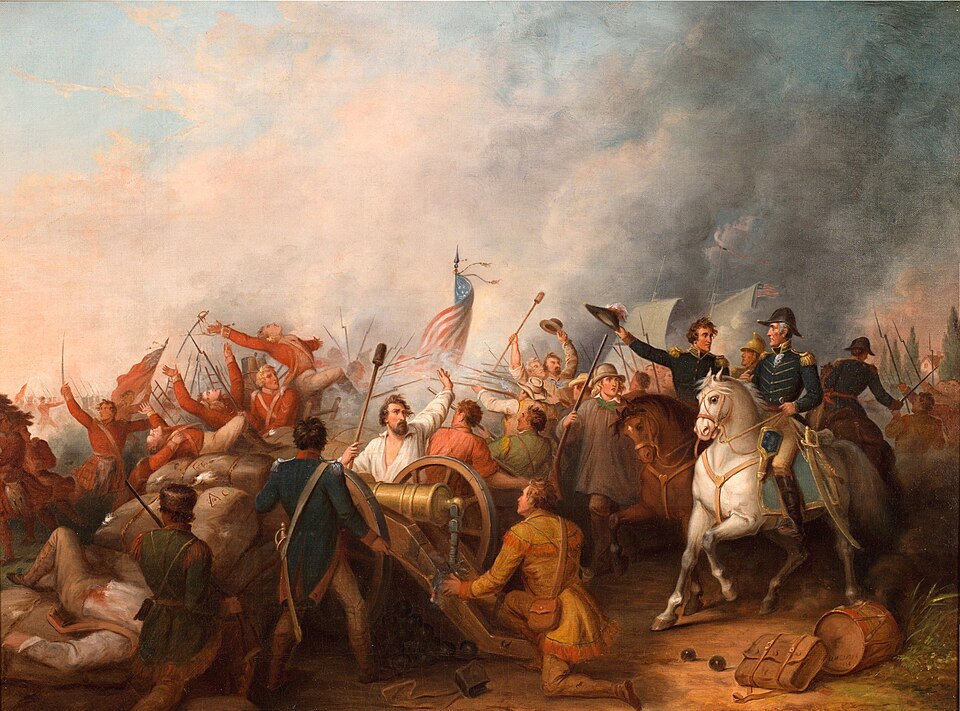
The Pirate Lafitte and the Battle of New Orleans
Robert Tallant · 1951
Jean Lafitte was the most successful pirate in American waters, operating out of the Louisiana bayous and selling his plunder openly in New Orleans, until Andrew Jackson needed him, and he helped turn the Battle of New Orleans into one of the most lopsided American military victories in history. Tallant's narrative captures both the roguish glamour of Lafitte's pirate kingdom and the strategic importance of the battle that, ironically, was fought weeks after the peace treaty ending the War of 1812 had already been signed. Tallant engagingly covers a favorite episode in the history of the new nation.
Gr. 5–7Biography / History~190 pp.
08
The Man Who Wouldn't Give Up: Henry Clay
Mabel Cleland Widdemer · 1961
Henry Clay of Kentucky was the most consequential legislator of the antebellum era, the architect of the Missouri Compromise, the American System, and the Compromise of 1850, and the man who held the Union together long enough for Lincoln to save it. Widdemer follows his career from his Kentucky frontier beginnings through his three failed presidential campaigns and his long Senate career, capturing both the personal magnetism that made him one of the great political orators of his age and the stubborn conviction that the Union was worth any compromise to preserve. A strong biography for understanding the half-century before the Civil War.
Gr. 5–7Biography~190 pp.
09
Great Days of Whaling
Roger Hough · 1958
American whaling in its golden age was one of the most demanding and dangerous occupations in the world, sending men from Nantucket and New Bedford on voyages of two and three years into every ocean on earth. Hough covers the full span of the industry, from the small colonial shore fisheries through the great open-ocean voyages that made New England the center of a global enterprise, and into the decline that came when petroleum replaced whale oil. An engaging account of an industry that built fortunes, shaped whole communities, and asked extraordinary things of ordinary men.
Gr. 5–7History~180 pp.
10
Clipper Ship Days
John Jennings · 1952
The American clipper ship was the fastest sailing vessel ever built, and for roughly two decades before steam made them obsolete, the great clippers set records on the Cape Horn run to California that have never been equaled under sail. Jennings covers the ships, the captains who drove them through storms and calms alike, and the races between rival vessels that gripped the attention of both coasts. A fast-paced account of a brief and vibrant chapter in American maritime history.
Gr. 5–7History~184 pp.
11
The Flag Is Still There
Neil Swanson · 1933
The story behind "The Star-Spangled Banner". The bombardment of Fort McHenry in 1814, the giant flag that flew through the night of British rockets and bombs, and the lawyer-poet Francis Scott Key watching from a British ship while he wrote the verses that became the national anthem. This historical novel moves quickly, and Swanson's rendering of the bombardment that inspired Key makes the anthem's survival feel like the remarkable near-thing it actually was.
Gr. 5–7Historical Fiction~175 pp.
Frontier & Westward
Prairie homesteads, backwoods heroes, and lives built on the edge of the known world
01
John Sevier, Son of Tennessee
Katharine Wilkie · 1958
John Sevier was the first governor of Tennessee, a hero of King's Mountain, and the founding father of the short-lived State of Franklin, a man whose life spanned the entire arc from Appalachian frontier warfare to American statehood. A personal favorite of mine, Wilkie's biography brings him and the Overmountain Men vividly to life. If you live in Tennessee, you know of John Sevier. But for the rest of us, this book provides a solid life story of a consequential figure who is often overlooked.
Gr. 5–7Biography~208 pp.
02
The Story of Davy Crockett
Enid LaMonte Meadowcroft · 1952
Meadowcroft's biography follows David Crockett from his Tennessee backwoods boyhood through his years as a hunter, militia fighter, and three-term congressman, and finally to the Alamo. The book is notable for treating Crockett as the complex figure he was, a real man whose legend overtook him in his own lifetime, rather than the coonskin-cap icon of popular mythology. A fine introduction to both the Tennessee frontier and the politics of Jacksonian America before students encounter the Alamo itself.
Gr. 4–6Biography~192 pp.
03
Frontier Hero: Simon Kenton
Shannon Garst · 1961
Simon Kenton was one of the greatest scouts and Indian fighters of the Revolutionary-era frontier, a Kentucky woodsman who survived capture, running the gauntlet, and more near-executions than any man had a right to, and emerged as a legend of the Ohio country. Garst's biography gives Kenton his due as a figure who deserves to stand alongside Daniel Boone in any telling of the early American West. A worthwhile read for students who want to understand the raw, dangerous reality of the trans-Appalachian frontier.
Gr. 5–7Biography~192 pp.
04
Wyatt Earp: U.S. Marshal
Stewart Holbrook · 1956
Holbrook's biography of Wyatt Earp follows the most famous lawman of the cattle-drive era from his early years on the frontier through his time as marshal in Dodge City and Tombstone, where the gunfight at the O.K. Corral made him a legend. Holbrook is consistently good at separating the man from the mythology that had already overgrown his reputation by the time the book was written. The picture of the post-Civil War cattle towns, their violence and their improvised order, is vivid.
Gr. 5–7Biography~185 pp.
05
Frontier Fighter: The Autobiography of George W. Coe
George W. Coe · 1934
George Coe arrived in Lincoln County, New Mexico as a teenager, and within a few years found himself fighting alongside Billy the Kid in the Lincoln County War, the bloody range conflict that pitted small ranchers against a corrupt mercantile monopoly and produced some of the most famous gunfights in frontier history. Written when Coe was the last surviving participant, the memoir has the authority of a man who was genuinely there and the plain-spoken directness of someone who had decades to think about what it all meant. A vivid primary source on frontier New Mexico, the reality behind the Billy the Kid legend, and what it was like to live through the violent end of the open range era.
Gr. 7–8Memoir / Primary Source~300 pp.
06
Indian Fighter: The Story of Nelson A. Miles
Ralph Bailey · 1965
Nelson Miles was one of the most effective and most controversial military commanders of the Indian Wars era, the general who accepted the surrenders of both Chief Joseph and Geronimo and pursued the last holdouts on the northern plains after the Little Bighorn. Bailey's biography covers the full sweep of Miles's long career without flinching from the human cost of the campaigns he led, and the portrait of the Army's role in the closing of the frontier is more honest than most accounts written for this age. A useful counterpart to the Native American section biographies, showing the same events from the Army's side.
Gr. 5–7Biography~185 pp.
07
The Royal Canadian Mounted Police
Richard L. Neuberger · 1953
Neuberger's history of the Mounties traces the force from its founding in 1873, when it was sent west to bring order to the Canadian prairie before the CPR arrived, through its transformation into a national police force and its legendary Arctic patrols. The contrast with the American frontier, where law came late and violently, is implicit throughout, and the book conveys why the Mounties became one of the most storied law-enforcement institutions in the world. A worthwhile read for students drawn to the northern frontier.
Gr. 5–7History~185 pp.
08
The Story of Oklahoma
Lon Tinkle · 1962
Tinkle's history of Oklahoma covers the full sweep of the state's extraordinary story, from the forced removal of the Five Civilized Tribes to Indian Territory through the Land Rush of 1889, the oil booms, and statehood in 1907. Few American states have a more compressed or dramatic history, and Tinkle renders it with the journalist's eye for detail and character that made his writing so vivid. An excellent introduction to a chapter of American history that brings together the sad story of Native removal and the realities of westward expansion.
Gr. 5–7History~185 pp.
09
John Charles Frémont: Trail Blazer to the West
Ronald Syme · 1962
John C. Frémont led five expeditions into the unmapped West, produced the maps and reports that guided thousands of Oregon Trail and California Trail emigrants, and played a central political role in the Bear Flag Revolt and California statehood. Syme's biography covers the full arc of his extraordinary career with his usual directness and reliable historical grounding, making Frémont's contributions to westward expansion, long underappreciated relative to the mountain men he relied on, clearly legible. Worth reading alongside the Kit Carson and Jedediah Smith biographies, since Frémont's fame depended largely on the guides who actually knew the country.
Gr. 5–7Biography~185 pp.
10
The Story of Annie Oakley
Edmund Collier · 1956
Phoebe Ann Moses, who became Annie Oakley, grew up in poverty in rural Ohio, taught herself to shoot to feed her family, and became the greatest exhibition marksman who ever lived, the star of Buffalo Bill's Wild West show and a figure famous on two continents. Collier's biography follows her from her hardscrabble childhood through her long partnership with Frank Butler and her career as a celebrity who used her fame with uncommon dignity and generosity. A vivid portrait of a genuinely self-made American whose skill and character were entirely her own.
Gr. 4–6Biography~185 pp.
11
Wild Bill Hickok Tames the West
Stewart Holbrook · 1952
James Butler "Wild Bill" Hickok was the most famous lawman of the post-Civil War frontier, a scout, gambler, and town marshal whose reputation with a pistol was as large as the legend that grew around it, and Holbrook's biography separates the man from the myth with characteristic good sense. The accounts of Hickok's time as marshal in Abilene and his years as an Army scout give a clear picture of the violent, improvised society of the cattle-drive era. A good read for students drawn to the law-and-order dimension of the frontier West.
Gr. 5–7Biography~180 pp.
12
Gold in California
Paul Wellman · 1958
Wellman's history of the California Gold Rush follows the discovery at Sutter's Mill through the great rush of 1849 and the transformation of California from a sleepy Mexican territory into a booming American state within a few years. The book is strong on the human diversity of the rush, the forty-niners who came by sea and overland, the merchants who made more than the miners, and the Native California peoples whose world was destroyed by the influx. A solid historical account that pairs well with By the Great Horn Spoon for students who want both the adventure and the fuller picture.
Gr. 5–7History~185 pp.
13
The Santa Fe Trail
Samuel Hopkins Adams · 1951
Adams traces the history of the great 900-mile trade route from Missouri to Santa Fe, from its opening by William Becknell in 1821 through its decades as the commercial artery connecting the United States to the Mexican Southwest. The caravans of wagons, the hazards of the Cimarron Cutoff, the encounters with Comanche and Kiowa raiders, and the transformation of the Southwest by American commerce all come through clearly. A solid account of a trail that shaped the westward expansion every bit as much as the Oregon Trail but receives less attention.
Gr. 5–7History~185 pp.
14
The Pony Express
Samuel Hopkins Adams · 1950
Adams tells the story of the Pony Express, the eighteen-month mail relay that linked Missouri to California from 1860 to 1861, covering the recruitment of the young riders, the 2,000-mile route through plains, desert, and mountain, and the dangers of weather, terrain, and occasional attack. The operation lasted only until the transcontinental telegraph made it obsolete, but it left one of the most vivid images in the mythology of the American West, and Adams does it justice. A fast-paced account that pairs well with the Santa Fe Trail book already in this section.
Gr. 5–7History~185 pp.
15
The Alaska Gold Rush
May McNeer · 1960
McNeer's account of the Klondike Gold Rush of 1897–99 follows the tide of stampeders over the Chilkoot Pass and down the Yukon River, conveying both the physical ordeal of the journey and the wild, improvised civilization that sprang up overnight at Dawson City. The book is strong on the human variety of the rush, the gamblers, the Mounties, the Native peoples whose land was overrun, and the handful who actually struck it rich. A vivid look at this event in the later American frontier era.
Gr. 5–7History~175 pp.
16
The Story of Buffalo Bill
Edmund Collier · 1952
William Cody's life covered nearly the entire span of the American West: Pony Express rider at fifteen, buffalo hunter for the railroad crews, Army scout during the Plains Wars, and finally creator of the Wild West show that brought frontier America to audiences across the United States and Europe. Collier captures the hardships, adventures and showmanship that made Cody one of the most famous Americans of his era.
Gr. 4–6Biography181 pp.
17
Little House on the Prairie
Laura Ingalls Wilder · 1935
The Ingalls family leaves their Wisconsin woods and strikes out for Kansas Indian Territory in a covered wagon, building a home from scratch on open land. Wilder's series is a thoughtful primary source; she is writing from memory about her own life. The texture of daily pioneer existence comes through. The series continues after this book as the young Ingalls girl and her siblings grow up out on the plains.
Gr. 4–6Memoir / Series335 pp.
18
By the Great Horn Spoon!
Sid Fleischman · 1963
A twelve-year-old Boston boy and the family butler stow away on a ship bound around Cape Horn to California in 1849, determined to strike gold and save the family fortune. Fleischman's writing is humorous, but the historical research into Gold Rush California and the roaring chaos of San Francisco in 1849 is solid throughout. An excellent book for readers more drawn to adventure than history.
Gr. 4–5Historical Adventure193 pp.
19
Island of the Blue Dolphins
Scott O'Dell · 1960
Based on the true story of the Lone Woman of San Nicolas Island, a Native American girl is stranded alone on an island off the California coast for eighteen years and survives by wit, skill, and sheer will. O'Dell's prose is spare and luminous, and the novel conveys a wealth of information about pre-contact California Native culture. A well-crafted American novel written for young readers.
Gr. 5–7Historical Fiction181 pp.
20
Moccasin Trail
Eloise Jarvis McGraw · 1952
A white boy raised by Crow Indians after being mauled by a grizzly must decide whether he belongs to the tribe or to the younger siblings he barely remembers, when his family arrives on the Oregon Trail and needs him. McGraw writes the tension between two worlds without false resolution: the Crow life is not romanticized, and the settler life is not the obvious right answer. A deeply considered exploration of identity set against the authentic landscape of 1840s fur-trade country.
Gr. 5–7Historical Fiction247 pp.
21
The Sign of the Beaver
Elizabeth George Speare · 1983
Left alone to guard the family's Maine cabin, thirteen-year-old Matt forms an unlikely alliance with a Penobscot boy named Attean, who teaches him to survive in the forest in exchange for reading lessons. Speare's research into the specific practices of Penobscot life and the fur-trade era is careful and respectful, and the friendship develops with real patience and friction. A perceptive story about what two peoples could have been to each other.
Gr. 4–6Historical Fiction135 pp.
22
Caddie Woodlawn
Carol Ryrie Brink · 1935
Based on the author's grandmother's life in 1864 Wisconsin, red-haired Caddie runs wild across the frontier alongside her brothers, befriends the neighboring Ojibwe people, and navigates the question of whether to grow up "civilized" or free. A wonderful counterpart to Wilder, different region, different sensibility, and a heroine who pushes harder against convention. The scenes involving settler and Native American relations are handled with unusual thoughtfulness for its era.
Gr. 4–6Historical Fiction275 pp.
Texas
The Republic, the Rangers, and the larger-than-life figures who made the Lone Star State
01
Sam Houston: The Tallest Texan
William Johnson · 1953
Sam Houston's life is almost impossibly large: Tennessee congressman, governor, adopted son of the Cherokee Nation, commander at San Jacinto, first president of the Republic of Texas, senator, and governor of the state of Texas, where he was deposed for refusing to support secession. Johnson's biography navigates this extraordinary arc with clarity and energy, and the portrait of Houston as a man whose loyalties ran deeper than politics is one of the most compelling in the genre. A natural starting point for anyone studying Texas, the antebellum South, or the nature of political courage.
Gr. 5–7Biography~190 pp.
02
James Bowie: Fighter and Frontiersman
Shannon Garst · 1960
James Bowie was one of the most dangerous men on the antebellum frontier, a Louisiana-born land speculator, slave trader, and knife fighter whose blade became so associated with his name that it entered the language. Garst's biography follows him from his Louisiana origins through his years in Texas, his marriage into a prominent Mexican family, his business dealings, and his death at the Alamo. A frank and well-researched account that doesn't sanitize Bowie but makes clear why men of his era found him compelling.
Gr. 5–7Biography~190 pp.
03
The Nine Lives of Deaf Smith
Faye Campbell Griffis · 1958
Erastus "Deaf" Smith was Sam Houston's most valuable scout during the Texas Revolution, a hearing-impaired frontiersman whose destruction of Vince's Bridge at San Jacinto helped seal the Texan victory. This biography rescues Smith from the footnotes he usually occupies and gives full weight to his remarkable career on the Texas frontier and his pivotal role in a war that changed the map of North America. Ideal reading alongside any study of the Mexican-American War or Texas independence.
Gr. 5–7Biography~200 pp.
04
Bigfoot Wallace of the Texas Rangers
Shannon Garst · 1951
William "Bigfoot" Wallace was one of the most colorful figures of the Texas frontier, a Virginia-born giant who came to Texas for revenge after the Goliad Massacre, rode with the Texas Rangers, survived the Black Bean Episode, and lived to be an old man full of outrageous stories. Garst renders his life with humor and energy, and her portrait of frontier Texas is vivid and full of life. An excellent gateway into the Republic of Texas period.
Gr. 5–7Biography~220 pp.
05
The Texas Rangers
Will Henry · 1957
A compilation of firsthand memories from old Texas Rangers, covering a wide range of events, fights, manhunts, outlaw trackings, Indian encounters, told in the voices of men who were there. The range of episodes gives readers a panoramic view of what Ranger service actually looked like across decades, and the cumulative effect is more vivid than any single narrative could be. A Texas history that preserves the texture of its era in the participants' own words.
Gr. 6–7History~215 pp.
06
With Milam and Fannin: Adventures of a German Boy in Texas' Revolution
Herman Ehrenberg · 1935 (orig. 1843)
Ehrenberg was a young German immigrant who fought alongside Ben Milam at the storming of San Antonio and later survived the Goliad Massacre. He was one of the few men in Colonel Fannin's surrendered force to escape execution, and he wrote this account while the memories were still fresh. As a primary source it is irreplaceable: a firsthand view of the Texas Revolution from an ordinary volunteer rather than a commander,. Readers who appreciated the Deaf Smith and Bigfoot Wallace biographies will enjoy this account from ground level.
Gr. 6–8Memoir / Primary Source~240 pp.
Mountain Men
Trappers, scouts, and the solitary figures who opened the American West
01
Jed Smith: Trail Blazer of the West
Frank Latham · 1952
Jedediah Smith was arguably the greatest explorer of America. The first to cross the Sierra Nevada, the first to reach California overland, the first to cross the Great Basin, and yet he's relatively unknown. Latham's biography follows Smith from his first seasons as a Rocky Mountain trapper through his epic transcontinental journeys. A good read that covers the expansion westward across the country and brings it to life.
Gr. 5–7Biography~190 pp.
02
Jedediah Smith, Fur Trapper of the Old West
Olive W. Burt · 1951
Jedediah Smith was a man of deep Christian faith who carried a Bible into the mountains and quoted it to his men on the trail, and that faith is one of the things that makes his story distinctive among the mountain men. Burt's biography brings out both his courage in the face of extraordinary physical danger and his systematic determination to go where no American had gone before. The accounts of his wilderness adventures, the grizzly attacks, the desert crossings, the mountain passes, are vivid throughout.
Gr. 5–6Biography~180 pp.
03
Kit Carson: Trapper, Scout, and Guide
Edna McGuire · 1943
Kit Carson lived the full arc of the Mountain Man era, from a Missouri boyhood through decades trapping the Rockies, guiding Frémont's exploring expeditions, and a military career that made him famous across the nation. McGuire's biography is brisk and accurate, built on primary sources, and gives a clear picture of what the fur-trade world looked like before railroads and settlers ended it forever. A good read for anyone drawn to the era of western exploration.
Gr. 5–7Biography~180 pp.
04
The Story of Kit Carson
Edmund Collier · 1953
Collier's biography covers Carson's life from his apprenticeship to a saddler through his years as the most celebrated scout in the American West, rendering the fur-trade era, the Frémont expeditions, and the Mexican-American War campaigns with good pacing and reliable historical grounding. It's roughly the same reading level as McGuire's account but takes a somewhat different emphasis. The two pair well for Kit Carson aficionados, but either one provides a good understanding of this well-known American. Collier's is a clean, unadorned narrative that trusts the material to carry itself, and it does.
Gr. 5–7Biography~200 pp.
05
Broken-Hand Fitzpatrick: Greatest of Mountain Men
Shannon Garst · 1961
Thomas Fitzpatrick, known to the tribes as "Broken Hand", was one of the early leaders of the Rocky Mountain trappers, and later became the most respected Indian agent on the plains, a man trusted by both sides in an era when trust between whites and Native nations was almost impossible to sustain. Garst's biography is one of her best, and Fitzpatrick is a very admirable but relatively little-known figure of the era. An engaging read for understanding the plains wars, the fur trade and the men who braved harsh conditions and many dangers to fuel it.
Gr. 5–7Biography~210 pp.
06
Joe Meek, Man of the West
Shannon Garst · 1954
Joe Meek was one of the most flamboyant and entertaining figures of the mountain-man era, a Virginia backwoodsman who spent twenty years trapping the Rockies alongside Bridger and Carson, married into the Nez Perce Nation, and eventually became U.S. Marshal of Oregon Territory. Garst captures both his outrageous humor and his celebrated courage. The arc of his life, from the mountains to the last great Rendezvous to Oregon statehood, covers the latter part of the mountain-man era in a lively read.
Gr. 5–7Biography~200 pp.
07
The Saga of Hugh Glass: Pirate, Pawnee, and Mountain Man
John Myers Myers · 1963
Hugh Glass led one of the most improbable lives in the American West before the grizzly encounter that made him famous: a former pirate, a captive of the Pawnee who chose to stay and live among them, and eventually one of the most experienced fur trappers on the Upper Missouri. Myers reconstructs his full career as well as the episode that defines his legend, the mauling by a grizzly that left him for dead, and his extraordinary crawl of nearly two hundred miles through the Dakota wilderness to survive. The survival story at its center remains one of the most extraordinary in American history, and Myers does justice to both the man and the era.
Gr. 6–7Biography / History~200 pp.
08
Jim Bridger: Mountain Man
Stanley Vestal · 1946
Jim Bridger spent fifty years in the mountains, discovering the Great Salt Lake, building Fort Bridger on the Oregon Trail, guiding army expeditions, and becoming the most famous scout of his generation. Bridger was illiterate but possessed a geographic memory so precise that his mental maps of the Rockies proved more accurate than any chart. An absorbing portrait of a man whose life constitutes a complete education in the mountain-man era.
Gr. 5–7Biography~230 pp.
09
Jim Bridger: Man of the Mountains
Willard & Celia Luce · 1966
Jim Bridger's life reads like legend: the discovery of the Great Salt Lake, the building of Fort Bridger on the Oregon Trail, decades as the most trusted guide and scout in the West. The Luces tell his story in clear, direct prose that captures the adventure and the character of the man without losing historical grounding. A short and satisfying read at about 80 pages.
Gr. 2–3Biography~80 pp.
10
Jim Beckwourth: Black Trapper and Indian Chief
Wyatt Blassingame · 1963
Jim Beckwourth was one of the most remarkable figures of the entire mountain-man era. Born into slavery in Virginia, he became a free man, a Rocky Mountain trapper, a war chief of the Crow Nation, a California gold-rush figure, and the discoverer of the Sierra Nevada pass that still bears his name. Blassingame's biography gives Beckwourth the treatment he deserves as both an adventure story and a portrait of a Black man navigating the frontier on his own extraordinary terms.
Gr. 2–3Biography~80 pp.
11
Trapper Days
Hunkins & Allen · 1942
A narrative account of the Rocky Mountain fur trade in its heyday, following the trappers through their seasonal routines of setting beaver lines, wintering in the mountains, and converging on the great summer Rendezvous where they traded their furs and resupplied for another year. The book captures the texture of daily mountain-man life with close attention to the skills, the gear, and the Native relationships that made survival possible. A good complement to the individual biographies in this section for a broad picture of the world these men inhabited.
Gr. 5–7History~185 pp.
Native Americans
Resistance, survival, and the cost of American expansion
01
Tecumseh: Shooting Star of the Shawnee
Dwight Jon Zimmerman · 2010
"Where today are the Pequot? Where are the Narragansett, the Mohican, the Pokanet, and many other once powerful tribes of our people? They have vanished before the avarice and the oppression of the White Man, as snow before a summer sun." Tecumseh was a Shawnee warrior, political leader, and spellbinding orator who traveled among the tribes from the Great Lakes to the Gulf of Mexico, arguing that no nation had the right to sell land that belonged to all peoples in common. Zimmerman's biography covers his life from his Ohio boyhood through Tippecanoe and his death in 1813, richly illustrated with period photographs, portraits, and maps. This work covers earlier Native American resistance, predating the other leaders in this section by half a century.
Gr. 5–7Biography124 pp.
02
The Story of Crazy Horse
Enid LaMonte Meadowcroft · 1954
Meadowcroft's biography of Crazy Horse traces the Oglala Lakota war leader from his boyhood on the northern plains through the battles of the Little Bighorn and his eventual surrender and death, treating him throughout as a fully realized human being rather than a symbol. The portrait that emerges is of a man of genuine spiritual depth and tactical genius, profoundly committed to a way of life he understood to be vanishing. One of the best introductions to the Plains Indian wars written for this age group.
Gr. 5–7Biography~180 pp.
03
Chief Joseph of the Nez Perce
Shannon Garst · 1953
Chief Joseph's 1,400-mile retreat with his people across four states, pursued by the U.S. Army through mountains and plains, remains one of the most remarkable military withdrawals in American history, and Garst renders it with the weight it deserves. Joseph himself emerges as a figure of extraordinary dignity: a man who chose flight over slaughter and peace over revenge at every turning point. A deeply moving biography that leaves readers with a clear-eyed understanding of what the westward expansion actually cost.
Gr. 5–7Biography~190 pp.
04
Cochise: Great Apache Chief
Enid Johnson · 1953
Cochise led the Chiricahua Apache in a decade-long resistance against the U.S. Army in the Southwest, one of the most effective and longest-sustained Native military campaigns of the entire post-Civil War era, and Johnson's biography gives full weight to both his military skill and the injustices that drove him to war. The book is notable for treating the Apache perspective with genuine seriousness, explaining why Cochise fought rather than simply cataloguing battles. A good read for understanding the Southwest or post-Civil War westward expansion.
Gr. 5–7Biography~185 pp.
05
Osceola: Seminole Leader
Ronald Syme · 1976
Osceola led the Seminole resistance in Florida against the U.S. government's forced removal policy in one of the longest and most costly Indian wars in American history, and died in captivity after being seized under a flag of truce, an act that shocked even Americans who had supported removal. Syme's biography is brisk and honest, making no attempt to soften either Osceola's fierce resistance or the duplicity of the government that finally captured him. A solid read for understanding the Jacksonian era and the broader story of Native removal.
Gr. 5–7Biography~190 pp.
06
Red Cloud: Fighter and Statesman
Shannon Garst · 1975
Red Cloud of the Oglala Lakota is the only Native leader in American history to win a war against the United States, forcing the government to abandon its Bozeman Trail forts in 1868, and Garst's biography gives that remarkable fact the prominence it deserves. What makes the book especially valuable is its treatment of Red Cloud's later years as a statesman, negotiating for his people in Washington with the same strategic intelligence he had shown on the battlefield. A biography that challenges easy narratives about both the plains wars and their aftermath.
Gr. 5–7Biography~200 pp.
07
Sitting Bull: Champion of His People
Shannon Garst · 1946
Sitting Bull, spiritual leader, war chief, and the figure most associated in the American imagination with the Battle of the Little Bighorn, receives a full and fair biography from Garst that traces his life from his boyhood hunts on the northern plains to his murder at Standing Rock in 1890. Garst is careful to distinguish between legend and fact, and her portrait of the world Sitting Bull was defending: its rhythms, its values, its beauty, gives the losses of the plains wars their full human weight. One of the best of the Garst biographies.
Gr. 5–7Biography~200 pp.
08
Geronimo: The Fighting Apache
Ronald Syme · 1975
Geronimo led the last significant armed Native resistance in the continental United States, holding out in the Sierra Madre mountains of Mexico with a handful of followers against thousands of U.S. and Mexican troops, and Syme's biography captures both the tactical brilliance and the personal grief that drove him. The book is notably honest about the failures of reservation policy that repeatedly provoked Apache resistance, and doesn't reduce Geronimo to either villain or romantic hero. A worthy closing volume to an introductory treatment of nineteenth century Native Americans and the resistance to the westward expansion.
Gr. 5–7Biography~185 pp.
The Civil War Era
A nation divided — the leaders, soldiers, and civilians of the Civil War
01
Lincoln: A Photobiography
Russell Freedman · 1987
Freedman's Newbery Medal biography of Abraham Lincoln uses period photographs to anchor a narrative that is rigorously honest about Lincoln's contradictions: his humor and his silences, his evolving views on race, his devastating losses. Freedman sets a standard for biographies for young readers: no hagiography, no simplification, just a great life taken seriously and written with clarity. A biography that gives Lincoln the full complexity he deserves and leaves readers with a rich picture of the man.
Gr. 5–7Biography150 pp.
02
Lee and Grant at Appomattox
MacKinlay Kantor · 1950
Kantor's account of the final days of the Civil War centers on the surrender at Appomattox Court House in April 1865, reconstructing the meeting between Lee and Grant with meticulous attention to what both men said, did, and felt on that extraordinary afternoon. The book is notable for treating both commanders with equal dignity, and for conveying why the generous terms Grant offered mattered as much to the peace as the surrender itself. Short and precise, it's a rewarding addition to a study of the Civil War.
Gr. 5–7History~160 pp.
03
Gettysburg
MacKinlay Kantor · 1952
Kantor reconstructs the three days of Gettysburg in July 1863 with the novelistic precision that won him a Pulitzer for Andersonville, moving between Confederate and Union perspectives to convey how the battle looked and felt at ground level rather than from a general's map. The accounts of Pickett's Charge, Little Round Top, and the Peach Orchard are rendered with exceptional vividness. The best single account of Gettysburg written for this age.
Gr. 5–7History~190 pp.
04
Raphael Semmes: Confederate Admiral
Joseph Daly · 1963
Raphael Semmes commanded the CSS Alabama, the Confederate commerce raider that captured or sank 65 Union merchant vessels over 22 months before being sunk off Cherbourg in 1864, one of the most remarkable naval careers in American history. Daly's biography follows Semmes from his antebellum Navy service through his command of the Alabama and his postwar life, and conveys both the seamanship required to keep a warship at sea for years without a friendly port and the legal and moral complexity of commerce warfare. An unusual perspective on the Civil War for students who have only encountered its land battles.
Gr. 5–7Biography~185 pp.
05
Clara Barton
Helen Boylston · 1955
Clara Barton organized battlefield nursing during the Civil War at a time when women were barred from military hospitals, then went on to found the American Red Cross, and Boylston's biography captures both the extraordinary personal courage required to do the first and the organizational genius required to do the second. The battlefield scenes are frank without being gratuitous, and the portrait of Barton navigating male resistance at every stage is both historically instructive and inspiring. A good read for students interested in the history of medicine and humanitarian work.
Gr. 5–7Biography~190 pp.
06
Harriet Tubman: Conductor on the Underground Railroad
Ann Petry · 1955
Petry's biography of Harriet Tubman, herself a distinguished novelist, is the finest account of Tubman's life written for young readers, refusing both the sanitized hagiography and the simplified heroism that most treatments offer in their place. The portrait that emerges is of a woman of ferocious physical and moral courage operating under conditions of absolute danger, whose faith sustained what sheer determination alone could not have. A moving book for any study of slavery, the Underground Railroad, or what genuine courage looks like in practice.
Gr. 5–7Biography247 pp.
07
Stonewall Jackson
Jonathan Daniels · 1959
Thomas "Stonewall" Jackson was the most tactically brilliant commander the Confederacy produced, and Daniels's biography traces his life from his impoverished Virginia boyhood through his transformation at VMI and his extraordinary Valley Campaign of 1862 before his death by friendly fire at Chancellorsville. The book is honest about Jackson's eccentricities and his deep religiosity while giving full weight to his military genius, and the Shenandoah Valley campaign is explained clearly enough that readers understand why military historians still study it. A strong biography for young readers serious about the Civil War's military history.
Gr. 5–7Biography~185 pp.
08
William Tecumseh Sherman: Defender of the Union
Wyatt Blassingame · 1970
Sherman was one of the most innovative military minds on the northern side of the Civil War, the general who understood before almost anyone else that destroying an enemy's will and capacity to wage war mattered as much as defeating his armies in the field. Blassingame's biography traces his career from his prewar years in banking and education through his great campaigns, Vicksburg, Atlanta, the March to the Sea, examining the controversial personality that still divides historians. A compact and readable biography of a figure whose impact on the war and the American military was profound.
Gr. 5–7Biography143 pp.
09
Robert E. Lee and the Road of Honor
Hodding Carter · 1955
Carter, a Pulitzer Prize-winning Southern journalist, brings particular insight to Lee's life, tracing his career from his boyhood in a family burdened by his father Light-Horse Harry Lee's debts, through West Point, the Mexican War, his agonizing decision to resign his U.S. Army commission and side with Virginia, and the four years of command that made him the most admired general in American history. The portrait is honest about both Lee's greatness and the cause he served. A strong biography of the man around whom the Confederate war effort depended.
Gr. 5–7Biography186 pp.
10
Gallant Pelham: American Extraordinary
Charles G. Milham · 1959
John Pelham was nineteen when he left West Point to join the Confederacy, and by twenty-two was commanding Stuart's horse artillery with a tactical brilliance that made him famous on both sides of the war. His performance at Fredericksburg drew Lee's public admiration and cemented his reputation as one of the most gifted artillery commanders of the conflict. Milham follows him from his Alabama boyhood through sixty engagements without losing a gun. An adult-level book, but a rewarding read for serious students of the Civil War.
Gr. 7–8Biography237 pp.
11
Across Five Aprils
Irene Hunt · 1964
Young Jethro Creighton grows up on an Illinois farm while his brothers fight on opposite sides of the Civil War, one for the Union, one for the Confederacy, and the war's full moral and emotional weight falls on his shoulders at home. Hunt renders the era's newspaper debates, the politics of Lincoln's presidency, and the grinding home-front reality with remarkable sophistication for a middle-grade novel. An enduring novel about what the Civil War actually cost American families.
Gr. 5–7Historical Fiction190 pp.
12
Rifles for Watie
Harold Keith · 1957
A Kansas farm boy enlists in the Union Army and ends up as a spy behind Confederate lines among the Cherokee forces of Stand Watie, the last Confederate general to surrender. This Newbery Medal winner is notable for its honest depiction of the Trans-Mississippi war, the Cherokee Nation's tragic divided loyalties, and the unglamorous truth of a three-year infantry enlistment. Long and dense, it rewards patient readers with an exceptionally full picture of the war.
Gr. 6–7Historical Fiction332 pp.
13
Soldier's Heart
Gary Paulsen · 1998
Based on the true story of Charley Goddard, who enlisted in the First Minnesota Volunteers at fifteen and came home from Gettysburg irreparably damaged, what soldiers then called "soldier's heart" and we now call PTSD. Paulsen writes with the same stripped economy he brings to survival fiction, and the battle scenes are among the most honest depictions of Civil War combat written for this age group. A short, powerful read that presents students with a profound depiction of the human cost of the war.
Gr. 6–7Historical Fiction106 pp.
14
Brady
Jean Fritz · 1960
Brady Minton, a talkative, unreliable Pennsylvania boy, stumbles on a secret Underground Railroad station run by his father and must learn to keep a secret for the first time in his life, as the Fugitive Slave Act makes silence a matter of life and death. Fritz is a strong historical researcher and masterfully conveys the details of 1836 Pennsylvania, the abolitionist movement, and the mechanics of the Underground Railroad. A moral coming-of-age story with high stakes.
Gr. 5–6Historical Fiction223 pp.
World War I
Trenches, biplanes, and the war that changed everything
01
The Story of Edith Cavell
Iris Vinton · 1959
Edith Cavell was the British nurse who ran a network helping Allied soldiers escape from German-occupied Belgium and was executed by firing squad in 1915, becoming one of the defining martyrs of the war. Vinton tells her story with the same steady authority she brings to her naval biographies, and the portrait of Cavell's moral clarity in the face of her sentence is moving. An important description of what the First World War looked like for civilians and medical workers on occupied ground.
Gr. 5–7Biography~180 pp.
02
The Red Knight of Germany
Floyd Gibbons · 1927
Gibbons's biography of Manfred von Richthofen, the highest-scoring ace of the First World War, was written by one of the most celebrated American war correspondents of the era and reads with the pace of the aerial combat it describes. Richthofen is rendered not as a propagandistic villain but as a formidable and at times admirable adversary, and the world of early military aviation is captured with unusual vividness: fragile planes, open cockpits, pilots who flew until they were killed. A unique angle on the history of the air war over the Western Front.
Gr. 6–7Biography~310 pp.
03
America's First World War: General Pershing and the Yanks
Henry Castor · 1957
Castor's account follows the American Expeditionary Forces from their arrival in France in 1917 through the Meuse-Argonne Offensive of 1918. The largest military operation in American history up to that point, with Pershing's stubborn insistence on an independent American command at the center of the narrative. The book is valuable for its clear explanation of why the American entry changed the strategic balance of the war, and for its honest portrait of the scale of American losses. The best single account of the American experience in the First World War written for this age group.
Gr. 5–7History~185 pp.
04
Lawrence of Arabia
Alistair MacLean · 1962
MacLean's biography of T.E. Lawrence follows the Oxford scholar who became the unlikely military advisor to the Arab Revolt against the Ottoman Empire, leading Bedouin raiders in the guerrilla campaign that helped unravel the Ottoman hold on Arabia and Palestine. The account of Lawrence's desert campaigns, the ambushes, the dynamiting of railways, the capture of Aqaba, is among the most gripping military adventure writing for this age group. A natural complement to the Western Front accounts, opening up the Middle Eastern theater that most students never encounter and that shaped the modern world as profoundly as the trenches of France.
Gr. 6–7Biography~176 pp.
05
The Yanks Are Coming: The United States in the First World War
Albert Marrin · 1986
Marrin's account of the American experience in the First World War covers the politics of neutrality and intervention, the raising and training of the AEF, Pershing's struggle for an independent command, and the great battles of 1918, with consistent attention to what the war actually felt like for the men who fought it. The book is notable for taking the broader European context seriously, giving students enough background on the causes and earlier campaigns to understand why the American arrival mattered as much as it did.
Gr. 6–7History284 pp.
06
Sergeant York: His Own Life Story and War Diary
Alvin York, ed. Tom Skeyhill · 1928
Alvin York was a Tennessee sharpshooter and devout Christian pacifist who went to war with a religious exemption request and came home as the most celebrated American soldier of the conflict, having single-handedly killed 28 German soldiers and captured 132 more in the Argonne Forest. This account, edited from York's own diary and interviews by journalist Tom Skeyhill, preserves his voice with remarkable authenticity: plain-spoken, deeply religious, and quietly astonished by what he did. One of the great individual combat memoirs of any war, and a primary source that reads like a fast-paced novel.
Gr. 6–7Memoir / Primary Source~290 pp.
World War II
The greatest conflict in human history, told through the people who lived it
01
Guadalcanal Diary
Richard Tregaskis · 1943
Tregaskis was a war correspondent embedded with the Marines during the first American offensive of the Pacific war. This diary, written in real time and published while the fighting was still going on, is one of the most gripping combat accounts ever written. The prose has an immediacy that later histories cannot achieve: Tregaskis describes what he sees and hears and smells with a reporter's discipline, conveying the images of men fighting and dying in the jungle heat of Guadalcanal.
Gr. 6–7Memoir / Primary Source263 pp.
02
The Sinking of the Bismarck
William L. Shirer · 1962
Shirer, author of The Rise and Fall of the Third Reich and one of the most authoritative American voices on the European war, wrote this account of the Bismarck's maiden voyage and destruction specifically for young readers, and the result is a model of how to make a complex naval action comprehensible without oversimplifying it. The eight-day chase across the North Atlantic, involving scores of ships and aircraft from both sides, is rendered with clarity and mounting tension. A compelling description of the beginning of the Naval War in the Atlantic.
Gr. 5–7History~180 pp.
03
Combat Nurses of World War II
Wyatt Blassingame · 1967
Blassingame profiles American military nurses who served in every theater of the war, North Africa, the Pacific, Europe, the China-Burma-India theater, women who worked under fire, endured captivity as POWs in the Philippines, and flew on the first air-evacuation missions in history. The book is an important and dramatic complement to accounts of the war focused exclusively on combat, making sure their stories are not forgotten.
Gr. 5–7History / Biography~185 pp.
04
Battle for Iwo Jima
Robert Leckie · 1967
Leckie, himself a Marine veteran of the Pacific, reconstructs the thirty-six-day battle for Iwo Jima with authoritative detail and a ground-level perspective that conveys both the tactical complexity of the assault and the human cost of taking an island defended by 22,000 Japanese troops who had been ordered to fight to the last man. The account of the flag-raising on Suribachi is placed in proper context here, neither mythologized nor deflated. Essential reading for understanding some of what the Marines endured in the amphibious warfare in the Pacific.
Gr. 6–7History~192 pp.
05
The Endless Steppe
Esther Hautzig · 1968
In 1941, ten-year-old Esther and her family are arrested by Soviet troops in Polish Vilna and deported to Siberia as "capitalists and enemies of the people", and she spends five years finding beauty, friendship, and self in the harshest conditions imaginable. This memoir is a masterpiece of understatement: Hautzig describes genuine suffering without melodrama, and the result is powerful. It provides a worthwhile window into WWII's eastern European dimension.
Gr. 5–8Memoir243 pp.
06
Girl in the Belgian Resistance
Fernande Davis · 1956
Davis's memoir recounts her own experiences as a young woman working with the Belgian underground, passing messages, sheltering Allied airmen, moving through a city under German occupation where discovery meant arrest and probable death. The firsthand perspective gives the narrative an immediacy that no fiction can quite replicate, and Davis conveys with matter-of-fact clarity how ordinary people made extraordinary choices one day at a time. A valuable read for students ready to move from fiction to a primary account.
Gr. 5–8Memoir~190 pp.
07
Thirty Seconds over Tokyo
Ted Lawson & Bob Considine · 1943
Ted Lawson was one of Jimmy Doolittle's pilots in the April 1942 raid on Tokyo. The first American strike on the Japanese home islands was flown from an aircraft carrier without a landing plan, and Lawson tells his own story with the directness of a man who barely survived it. The ditching of his B-25 off the China coast and the agonizing journey to medical care through occupied territory make the second half of the book as gripping as the raid itself. Another firsthand account that reads faster and hits harder than any secondary history of the same events.
Gr. 6–7Memoir / Primary Source221 pp.
08
Battle of the Bulge
John Toland · 1959
Toland's account of the German Ardennes offensive of December 1944 covers the largest land battle ever fought by the U.S. Army. He writes for younger readers without sacrificing the complexity of an operation that nearly broke the Allied front wide open. The stories of individual soldiers at the Malmedy Massacre, the Siege of Bastogne, and the desperate fighting in the snowbound forests of Belgium give the strategic narrative a human scale.
Gr. 6–7History~210 pp.
09
The Flying Tigers
John Toland · 1963
The American Volunteer Group, Claire Chennault's Flying Tigers, flew against the Japanese over Burma and China for seven months in 1941–42, achieving an extraordinary kill ratio with outdated planes and improvised tactics before being absorbed into the regular Army Air Forces. Toland tells their story with the narrative pace that makes all his military histories accessible to young readers. His portrait of Chennault conveys his abrasive, visionary style of command and captures his perpetual state of war with his own superiors in the chain of command. A vivid account of an often-overlooked theater of the air war.
Gr. 6–7History~185 pp.
10
The Battle of Britain
Quentin Reynolds · 1953
Reynolds was in London during the Blitz as a correspondent, and his account of the summer and autumn of 1940, when the RAF fought the Luftwaffe for control of British skies while the civilian population sheltered in the Underground, carries the authority of a man who was there alongside his gift for accessible narrative. The book conveys why the Battle of Britain was a pivotal moment of the war: had the RAF broken, there would have been no base from which to liberate Europe. One of several excellent starting points for studying the war in Europe.
Gr. 5–7History~185 pp.
11
Great American Fighter Pilots of World War II
Robert D. Loomis · 1961
Loomis profiles the top American fighter aces of the war, Bong, McGuire, Gabreski, Johnson, and others, in short biographical chapters that can be read independently or in sequence, making it an ideal book for dipping in and out of alongside more sustained accounts. The profiles are accurate and vivid, and the variety of theaters and aircraft types covered gives a broad picture of American air power across both the Pacific and European fronts. A good read for students drawn to the air war.
Gr. 5–7History / Biography~185 pp.
12
Medal of Honor Heroes
Colonel Red Reeder · 1965
Reeder, himself a decorated combat veteran, profiles Medal of Honor recipients from across the branches and theaters of World War II, giving each man enough context to understand not just what he did but the situation that made it necessary. The accounts range from fighter pilots to infantrymen to sailors, and the cumulative portrait they form is of the breadth of American courage in the war rather than any single celebrated example. The book functions as a great reference resource, but also flows very well when read cover to cover.
Gr. 5–7History / Biography~200 pp.
13
The Scarlet and the Black
J.P. Gallagher · 1967
Monsignor Hugh O'Flaherty was an Irish priest in Rome who, operating from the Vatican's neutral ground, organized one of the most successful escape networks of the war, hiding thousands of Allied prisoners, Jews, and anti-Fascist Italians from the Gestapo under the nose of the SS commander Herbert Kappler. Gallagher's account of the cat-and-mouse between O'Flaherty and Kappler, and of the extraordinary moral courage required to run an operation where a single informant could mean mass death, is gripping throughout. A remarkable true story that introduces students to the Italian theater and to the Vatican's complex role in the wartime occupation of Rome.
Gr. 6–7History~220 pp.
14
To Hell and Back
Audie Murphy · 1949
Audie Murphy was the most decorated American combat soldier of World War II, and his memoir of the infantry campaign from North Africa through Sicily and Italy and into France and Germany is an unsparing account of ground combat. Murphy writes without heroics or self-pity, describing what it actually felt like to spend years in sustained close combat, and the cumulative effect is a portrait of ordinary men under extraordinary pressure that no secondary account can replicate.
Gr. 6–7Memoir / Primary Source274 pp.
15
Air Heroes of World War II
Joseph E. Jackson · 1966
Jackson profiles outstanding American aviators from both the Pacific and European theaters, from the early desperate days when outmatched pilots held the line at Wake Island and Midway through the great air campaigns of 1944 and 1945. The series of individual accounts provides a compelling introduction to many theaters of WWII, likely to spark interest for a deeper dive into specific battles or theaters.
Gr. 5–7History / Biography~185 pp.
16
Midway: Battle for the Pacific
Edmund L. Castillo · 1968
Castillo's account of the Battle of Midway in June 1942 covers the three days that turned the tide of the Pacific war, when American codebreakers and carrier pilots destroyed four Japanese fleet carriers and broke the offensive power of the Imperial Navy at the cost of one American carrier and heavy aircrew losses. The book is clear and well-paced, explaining the intelligence picture that made the American ambush possible and the moments of near-disaster that preceded the decisive dive-bomber attacks. A natural companion to Incredible Victory for students who want the full story of the battle from multiple perspectives.
Gr. 5–7History~185 pp.
17
Incredible Victory
Walter Lord · 1967
Walter Lord, who also wrote A Night to Remember on the Titanic, brings the same narrative mastery to the Battle of Midway, reconstructing the action minute by minute from the accounts of survivors on both sides. The result is a fascinating account of the battle and one of the best military histories for any age. The story of Torpedo Squadron 8 is well told and moving. One of the few books I would call essential reading on the topic of WWII's Pacific theatre.
Gr. 7–8History331 pp.
18
Officially Dead
Quentin Reynolds · 1945
The true story of Richard Kendrick, a Navy pilot shot down over the Pacific who spent years as a Japanese prisoner of war after being declared dead by the Navy, enduring the brutal conditions of Japanese captivity and surviving to return home. Reynolds tells the story with the same directness he brings to his other war writing, and the account of what American POWs in the Pacific actually experienced, largely unknown to the American public during the war, is important historical testimony. A gripping personal narrative that complements the broader campaign histories in this section.
Gr. 7–8History / Memoir~210 pp.
19
The Battle of Leyte Gulf
Thomas J. Cutler · 1994
The Battle of Leyte Gulf in October 1944, with 370 ships involved, was the largest naval battle since Lepanto (500 ships, 1571), and Cutler's account makes the sprawling four-part action comprehensible without losing the scale and drama of what was at stake. The near-catastrophic confusion at Taffy 3, where a handful of small escort carriers and destroyers faced the main Japanese battle fleet and somehow turned it back, is one of the most extraordinary episodes in American naval history. This is an adult-level book, but accessible to this age range due to its clarity. Side note: My uncle served aboard the battleship USS Mississippi in this battle and was wounded during a kamikaze attack.
Gr. 7–8History~300 pp.
20
The Seabees of World War Two
Edmund L. Castillo · 1963
The Naval Construction Battalions, the Seabees, built the airfields, harbors, roads, and bases that made the Pacific island-hopping campaign physically possible, often under fire and in conditions that would have halted civilian construction entirely. Castillo's account covers their formation, their major campaigns from Guadalcanal to Okinawa, and the remarkable can-do culture of men who were older and more skilled than the average serviceman and brought civilian competence to military problems. An underappreciated dimension of the Pacific war that gives young readers a vivid picture of the logistical foundations of modern military operations.
Gr. 5–7History~185 pp.
21
Number the Stars
Lois Lowry · 1989
Ten-year-old Annemarie Johansen helps her Jewish best friend escape Nazi-occupied Denmark in 1943, using a smuggling route organized by the Danish resistance to move Jews to neutral Sweden overnight. Lowry based this Newbery Medal novel on the true Danish rescue operation, one of the most remarkable acts of collective moral courage in the war, and the historical notes at the end are as worth reading as the story itself. Accessible for fourth graders but not too simple for older readers.
Gr. 4–6Historical Fiction137 pp.
22
The Winged Watchman
Hilda van Stockum · 1962
A Dutch family hides an Allied airman and a Jewish boy in their windmill home during the Nazi occupation of Holland, and two brothers must navigate constant danger with courage and faith. Van Stockum, who lived through the occupation herself, brings an insider's texture to the small daily indignities and dangers of life under Nazi rule that an outside researcher wouldn't likely think to include. Quieter and more domestic than most WWII novels, which makes its tension all the more effective.
Gr. 4–6Historical Fiction196 pp.
23
Twenty and Ten
Claire Huchet Bishop · 1952
Twenty French children in a mountain school during the Nazi occupation are asked to hide ten Jewish refugee children, and when the Gestapo comes to search, the twenty must hold their silence. Short and stripped to the bone, this novel makes its moral ask of both its characters and its readers with unusual directness and force. A worthwhile book for younger readers about the meaning of courage under occupation.
Gr. 3–4Historical Fiction76 pp.
Science & Inventions
Scientists, inventors, and the breakthroughs that transformed human life
01
The Story of Louis Pasteur
Alida Malkus · 1952
Malkus follows Pasteur from his modest French upbringing through his discovery of the germ theory of disease, the development of pasteurization, and his creation of vaccines for chicken cholera, anthrax, and rabies, telling the story of one of the most consequential scientific careers of the nineteenth century. The book is strong on the resistance Pasteur faced from the established medical community and the dramatic public experiments he used to overcome it. A vivid portrait of how scientific revolutions actually happen, and a good read for any student of science history.
Gr. 5–7Biography~185 pp.
02
The Story of Albert Schweitzer
Anita Daniel · 1957
Albert Schweitzer was by any measure one of the most remarkable individuals of the twentieth century: a Bach scholar, a philosopher of ethics, a trained physician, and the founder of a jungle hospital in Gabon that he ran for decades at personal cost most people would find unimaginable. Daniel's biography focuses on the medical mission, tracing Schweitzer's decision to leave a brilliant European career to practice medicine in equatorial Africa and the extraordinary persistence required to build and sustain Lambaréné. A portrait of what it looks like to put a life entirely in the service of others.
Gr. 5–7Biography~185 pp.
03
Bomb: The Race to Build and Steal the World's Most Dangerous Weapon
Steve Sheinkin · 2012
Sheinkin weaves together three parallel narratives: the scientists of the Manhattan Project racing to build the bomb, the Soviet spies stealing their secrets, and the Norwegian commandos destroying the German heavy water plant that might have let Hitler get there first. The result reads with the pace of a thriller while remaining scrupulously accurate, and it makes the scientific, moral, and political dimensions of the atomic bomb comprehensible to readers who might otherwise find the subject daunting. One of the finest works of narrative nonfiction for this age group produced in the last twenty years.
Gr. 6–8History266 pp.
04
Carry On, Mr. Bowditch
Jean Lee Latham · 1955
Nathaniel Bowditch, born in Salem in 1773, teaches himself mathematics and navigation by candlelight while working as an indentured servant, and eventually revolutionizes ocean navigation with a book that sailors used for over a century. This Newbery Medal winner makes mathematics heroic without cheating: the reader genuinely understands why what Bowditch did mattered. One of the best arguments in children's literature for the idea that intellect and determination can be their own kind of adventure.
Gr. 5–7Biography / Historical251 pp.
05
Archimedes and the Door of Science
Jeanne Bendick · 1962
Bendick's biography of Archimedes, the greatest mathematician and inventor of the ancient world, treats him as a genuine scientist rather than a legend, explaining his actual work in terms young readers can follow: levers, pulleys, pi, the displacement of water, and war machines that held off the Roman fleet. The book is unique in its ability to make ancient mathematics feel like an adventure rather than a subject.
Gr. 5–7Biography / Science143 pp.
06
Mr. Bell Invents the Telephone
Katherine B. Shippen · 1952
Shippen traces Alexander Graham Bell's life from his Scottish boyhood through his years teaching deaf students in Boston, work that directly inspired his obsession with transmitting the human voice, to the famous moment in 1876 when the telephone first worked. What makes the book stand out is its attention to Bell's method: patient, hypothesis-driven, and rooted in his understanding of acoustics and human speech. It makes the process of invention nearly as compelling as the invention itself.
Gr. 5–7Biography~180 pp.
07
The Mayo Brothers
Helen Clapesattle · 1962
William and Charles Mayo built the Mayo Clinic in Rochester, Minnesota, from their father's frontier prairie practice into the most famous medical center in the world, and Clapesattle's biography captures both the human story of two brothers and the larger story of how American medicine transformed itself in the late nineteenth and early twentieth centuries. The book is notable for making the development of surgical technique exciting, and for showing how much the Mayos' success depended on collaboration and institutional thinking rather than individual genius alone. A rather exciting introduction to the history of medicine for students interested in science.
Gr. 5–7Biography~190 pp.
08
The Story of Florence Nightingale
Margaret Leighton · 1952
Leighton's biography follows Florence Nightingale from her privileged English upbringing, and her family's fierce resistance to her ambitions, through her transformation of nursing during the Crimean War and her subsequent decades of statistical analysis and hospital reform. The book is notable for treating Nightingale as the systematic thinker and relentless institutional reformer she actually was, rather than simply a saintly bedside presence. A good read for students interested in the history of medicine and what one determined person can change.
Gr. 5–7Biography~185 pp.
09
Samuel Morse and the Electronic Age
Wilma Hays · 1966
Hays traces Samuel Morse's journey from portrait painter to inventor of the telegraph, giving careful attention to the years of failure and ridicule before the first message was transmitted from Washington to Baltimore in 1844, and to the way the telegraph instantly shrank a continent-sized country. The book is notable for conveying how the telegraph changed not just communication but the nature of war, commerce, and journalism in ways that transformed American life within a generation. An excellent bridge between the early Republic period and the industrial age for students studying American history chronologically.
Gr. 5–7Biography~175 pp.
10
The Wright Brothers: How They Invented the Airplane
Russell Freedman · 1991
Freedman uses the Wright brothers' own photographs, many taken by Wilbur and Orville themselves at Kitty Hawk, to ground this Newbery Honor biography in primary-source evidence that makes the achievement feel tangible and real. What emerges is a portrait of two bicycle mechanics who succeeded where funded professionals failed because they were methodical, humble about what they didn't know, and willing to fail repeatedly. A rewarding read for any student studying the industrial age or American innovation.
Gr. 5–7Biography129 pp.
11
The Wright Brothers: Pioneers of American Aviation
Quentin Reynolds · 1950
Reynolds's biography of the Wright Brothers is written at a more accessible level than Freedman's photobiography, making it the right starting point for fourth and fifth graders before they graduate to the more demanding treatment. The focus is squarely on Wilbur and Orville as boys and young men, their bicycle shop, their methodical reading in aeronautics, their early glider experiments at Kitty Hawk, and Reynolds has a gift for making the reader feel the excitement of each incremental step forward. A classic of the genre for good reason.
Gr. 4–6Biography~176 pp.
12
Marie Curie: Pioneer of the Atomic Age
Alan Ivimey · 1964
Ivimey's biography of Marie Curie covers her Polish childhood, her years of poverty-stricken study in Paris, and the grinding laboratory work that led to the discovery of polonium and radium and two Nobel Prizes in two different sciences. The book is clear about the actual science involved, explaining radioactivity in terms young readers can follow while never losing the human story of a woman working in a field that barely acknowledged her existence. The best biography of Curie for this age group, and a study in how to make scientific achievement exciting.
Gr. 6–7Biography~128 pp.
13
Thomas Edison: Young Inventor
Sue Guthridge · 1959
This biography follows Edison from his early years in Port Huron, selling newspapers on trains, running chemical experiments in the baggage car, going progressively deaf, through his emergence as a self-taught inventor. Guthridge captures how Edison's peculiar mind worked: insatiably curious, systematically persistent, and constitutionally unable to accept "it can't be done." A well-written account of how Edison's peculiar and inventive mind developed from boyhood.
Gr. 4–5Biography192 pp.
14
Isaac Newton: Organizing the Universe
William J. Boerst · 2003
Boerst's biography traces Newton's life from his solitary and obsessive years at Cambridge through his miraculous eighteen months of discovery during the plague years, when he worked out gravity, calculus, and optics largely in isolation. The book places his achievements in the context of the scientific community of his time without losing the thread of a life that was as strange and driven as any in the history of science. The narrative carries readers through material that could easily be intimidating.
Gr. 6–8Biography~144 pp.
Explorers
Navigators, adventurers, and pathfinders — by sea, by land, and across the ice
01
The Story of Leif Ericson
William O. Steele · 1954
Steele's biography of Leif Ericson follows the Norse explorer from his Greenland upbringing through his voyage to Vinland, the North American coast he reached five centuries before Columbus, drawing on the Icelandic sagas while making their content accessible to young readers. The portrait of the Norse world, its seafaring culture, its mythology, and its restless westward push, is unusually vivid, and the account of the Vinland settlement conveys why it ultimately failed. Essential for understanding the beginning of exploration of the New World.
Gr. 4–6Biography~185 pp.
02
The Story of Marco Polo
Olive Price · 1953
Price retells Marco Polo's twenty-four-year journey from Venice to the court of Kublai Khan and back, following his own account while making the geography, the cultures, and the sheer scale of the journey legible to young readers who have no frame of reference for the 13th-century world. The China Polo described, its cities, canals, paper money, and coal-burning, was so far in advance of Europe that Europeans refused to believe him, and Price conveys that gap with the wonder it deserves. The best introduction to a primary source that students might eventually read for themselves.
Gr. 4–6Biography / History~185 pp.
03
Vasco da Gama: Sailor Toward the Sunrise
Ronald Syme · 1959
Vasco da Gama accomplished one of the great navigational feats of the age of exploration, finding the first sea route from Europe to India by sailing around the southern tip of Africa and opening a direct trade passage that transformed the balance of power between East and West. Syme's biography covers all three of da Gama's voyages and the ruthless determination that made him both celebrated and feared. Well-written with plenty of adventure to keep interest.
Gr. 5–7Biography~180 pp.
04
Vasco Núñez de Balboa
Emma Gelders Sterne · 1961
Balboa was the first European to see the Pacific Ocean, hacking through the Isthmus of Panama in 1513 and wading into the water in full armor to claim it for Spain, and Sterne's biography gives full weight to both the extraordinary physical feat and the brutal colonial context in which it took place. The portrait of the Spanish Main in its earliest years, the desperate men, the gold hunger, the Native peoples caught in the collision, is rendered with unusual honesty.
Gr. 5–7Biography~185 pp.
05
Captain Cook Explores the South Seas
Armstrong Sperry · 1955
Sperry, a gifted writer of Pacific adventure fiction, traces James Cook's three great voyages through the South Pacific, the circumnavigation of New Zealand, the mapping of the Australian coast, the search for the southern continent, and his death in Hawaii in 1779. The book is excellent on Cook's method, the meticulous observation and careful charting that made his voyages scientifically as well as geographically transformative, and Sperry brings genuine feeling for the Pacific world Cook sailed through. The best introduction to Cook for this age group.
Gr. 5–7Biography~185 pp.
06
Alexander Mackenzie: Canadian Explorer
Ronald Syme · 1964
Alexander Mackenzie made two of the great journeys of exploration in North American history: his descent of the river that bears his name to the Arctic Ocean in 1789, and his overland crossing of the Rocky Mountains to the Pacific in 1793, completing the first transcontinental crossing of North America north of Mexico. Syme tells the story with his characteristic directness, and the Canadian wilderness comes through clearly. An important figure in the history of exploration who is better known in Canada than in the United States.
Gr. 4Biography96 pp.
07
Commodore Perry and the Opening of Japan
Ferdinand Kuhn · 1955
Matthew Perry's 1853 expedition to Japan forced a nation closed to the outside world for two centuries to accept American trade — one of the most consequential acts of diplomacy and naval power in the nineteenth century. In an era before the United States had a Department of Commerce, trade barriers were addressed through persuasive envoys and at times by displays of power, and Perry's mission embodied both. Kuhn tells the story with attention to both the American and Japanese perspectives, and the portrait of Japan on the eve of the Meiji Restoration gives readers a vivid sense of what modernization cost and what it transformed.
Gr. 5–7History~185 pp.
08
Down the Colorado with Major Powell
James Ramsey Ullman · 1960
John Wesley Powell lost his right arm at Shiloh, and four years after the Civil War led a crew of nine men in four wooden boats down the uncharted Green and Colorado rivers through the Grand Canyon, one of the great feats of American exploration. Ullman conveys both the physical ordeal and Powell's scientific discipline, mapping and naming the canyon's features even as the boats were breaking apart around him. A dramatic account of a journey that revealed the American Southwest to the outside world.
Gr. 5–7History~180 pp.
09
Matthew A. Henson's Historic Arctic Journey
Matthew Henson · 1912 (repr.)
Matthew Henson was Robert Peary's most essential partner on the Arctic expeditions — a skilled dog-sled driver, Inuit-language speaker, and polar navigator without whom Peary's 1909 claim to the North Pole could not have been made. This memoir, written in his own words, tells his extraordinary story from his early life to the pole. Henson's account is a primary source of the first order and one of the great overlooked adventure narratives in American exploration history. An important read for understanding both the history of polar exploration and the contribution of a Black American who was at times written out of the story.
Gr. 6–8Memoir / Primary Source~200 pp.
10
The Conquest of the North and South Poles
Russell Owen · 1952
Owen's account covers both polar frontiers, from the race for the North Pole by Peary and Cook through Amundsen's and Scott's race to the South Pole, treating the exploration of the polar regions as the last great chapter of geographical discovery on earth. The contrast between the Norwegian efficiency of Amundsen and the tragic heroism of Scott's British expedition gives the book a natural dramatic shape, and Owen is honest about both the achievements and the terrible costs. Broad coverage of polar exploration that may spark further interest in individual expeditions.
Gr. 6–8History~185 pp.
11
Shipwreck at the Bottom of the World
Jennifer Armstrong · 1998
Armstrong's account of the Endurance expedition uses Frank Hurley's extraordinary period photographs to anchor a narrative that follows Shackleton's crew from their departure in 1914 through the crushing of the ship in the Weddell Sea ice, the months on the ice floes, the open-boat voyage to South Georgia, and the final mountain crossing to reach help. Written specifically for this age group and scrupulously accurate, it conveys both the physical extremity of the ordeal and Shackleton's remarkable leadership without overstating either. Pairs naturally with Shackleton's Stowaway for students who want both the historical account and a novelized version of the same expedition.
Gr. 6–7History131 pp.
12
Shackleton's Stowaway
Victoria McKernan · 2005
Based on the true story of Perce Blackborow, a young Welsh merchant seaman who stowed away on Shackleton's Endurance expedition and found himself trapped in the Antarctic ice for nearly two years after the ship was crushed and sank. McKernan tells the story as a novel, staying close to the historical record, and conveys the grinding physical ordeal of the Endurance survival with a vividness that makes it one of the most gripping survival narratives available for this age group. An engaging introduction to Shackleton's legendary expedition before students are ready for Alfred Lansing's adult-level account.
Gr. 6–8Historical Fiction / Adventure346 pp.
Arts & Letters
Writers, composers, and artists who shaped the cultural world
01
The Story of Louisa May Alcott
Joan Howard · 1955
Howard's biography follows Alcott from her unconventional childhood as the daughter of the philosopher Bronson Alcott, whose impractical idealism left the family in chronic poverty, through her years as a seamstress, teacher, and nurse before the publication of Little Women made her famous and finally freed her family from want. The later chapters, covering the years when Alcott was famous, are as compelling as the early hardship.
Gr. 5–7Biography~180 pp.
02
Washington Irving
Anya Seton · 1960
Seton's biography of Washington Irving — the first American writer to achieve genuine international fame, follows him from his New York boyhood through his years in Europe, his time as a diplomat in Spain, and his return to his beloved Hudson Valley, where he wrote the stories that gave American literature some of its most enduring characters: Rip Van Winkle, Ichabod Crane, and the Headless Horseman. Seton is a gifted storyteller in her own right and the biography moves with the pace of her historical fiction, making the literary and diplomatic world of the early republic vivid and accessible.
Gr. 5–7Biography184 pp.
03
Beethoven: Master Musician
Madeleine Goss · 1936
An adult-level book, but accessible and rewarding for motivated seventh and eighth graders. Goss follows Beethoven from his difficult childhood in Bonn, where his alcoholic father exploited his talent, through his arrival in Vienna and his ascent to the center of European musical life, and into the long years of increasing deafness during which he composed some of the greatest music ever written. The book is written for general readers rather than music specialists, and Goss conveys both the biographical drama and the artistic achievement without requiring any prior musical knowledge.
Gr. 7–8 (stretch)Biography~280 pp.
04
Painting the Wild Frontier: The Art and Adventures of George Catlin
Susanna Reich · 2008
George Catlin spent eight years in the 1830s traveling among the Plains tribes, painting over 600 portraits and scenes of a way of life he knew was disappearing, and Reich's biography follows him through those years and the long, difficult aftermath, when he tried to bring his gallery to the world's attention and largely failed in his own lifetime. The book is unusually strong on the art itself, reproducing many of Catlin's paintings and connecting them to the historical moment they recorded. A natural complement to the Native Americans section of this site, giving students a view of that world through the eyes of a witness who lived inside it.
Gr. 5–8Biography160 pp.
05
Raphael: A Biography
Elizabeth Ripley · 1961
Ripley's short illustrated biography of Raphael covers his brief and astonishingly productive life from his apprenticeship in Urbino through his years in Florence studying Leonardo and Michelangelo, and his final decade in Rome where he painted the Vatican frescoes and became the most celebrated artist in Italy before his death at thirty-seven. Illustrated throughout with photographs of his paintings. A compact and accessible introduction to one of the supreme figures of the High Renaissance.
Gr. 4–6Biography~72 pp.
06
Rubens: A Biography
Elizabeth Ripley · 1964
Rubens led one of the most extraordinary lives in the history of art: painter, diplomat, linguist, and scholar, he served as a secret emissary between Spain, England, and the Dutch Republic while producing an output of paintings that filled the courts of Europe. Ripley's short illustrated biography captures both the scale of his ambition and the warmth of his personal life, with particular attention to the large workshop he ran and the younger painters, including Van Dyck, who trained under him. An eye-opening portrait of an artist who was also a man of the world in the fullest sense.
Gr. 4–6Biography72 pp.
07
Vincent Van Gogh: A Biography
Elizabeth Ripley · 1954
Ripley traces Van Gogh's life from his early years in the Netherlands, through his failures as a preacher and art dealer, his arrival as a painter in Paris, and his final years in Arles and Saint-Rémy where he produced the paintings that would make him famous long after his death. Illustrated with his works throughout, and drawing on his remarkable letters to his brother Theo. A short and moving account of one of the most dramatic lives in the history of art.
Gr. 4–6Biography68 pp.
The Young Historian's Bookshelf
Curated by Roderick Anderson · younghistoriansbookshelf.com
1.The Exploits of Xenophon— Geoffrey Household · 1955 · Gr. 5–7 · ~180 pp. · History / Retelling
2.Alexander the Great— John Gunther · 1953 · Gr. 5–7 · ~180 pp. · Biography
3.Julius Caesar— John Gunther · 1959 · Gr. 6–7 · ~210 pp. · Biography
4.The Bronze Bow— Elizabeth George Speare · 1961 · Gr. 5–7 · 255 pp. · Historical Fiction
5.The Eagle of the Ninth— Rosemary Sutcliff · 1954 · Gr. 6–8 · 255 pp. · Historical Fiction
6.Black Ships Before Troy— Rosemary Sutcliff · 1993 · Gr. 5–7 · 128 pp. · Myth / Retelling
7.Quo Vadis— Henryk Sienkiewicz · 1895 · Gr. 8 · 417 pp. · Historical Fiction
Medieval & Renaissance
1.Genghis Khan and the Mongols— Harold Lamb · 1954 · Gr. 5–7 · 182 pp. · Biography
2.The Crusades— Anthony West · 1954 · Gr. 4–7 · 185 pp. · History
3.The Magna Carta— James Daugherty · 1956 · Gr. 5–7 · ~180 pp. · History
4.Joan of Arc— Nancy Wilson Ross · 1953 · Gr. 5–7 · ~180 pp. · Biography
5.St. Thomas More of London— Elizabeth Ince · 1954 · Gr. 5–7 · 164 pp. · Biography
6.The Galleys at Lepanto— Jack Beeching · 1982 · Gr. 7–8 · ~280 pp. · History
7.A Man for All Seasons— Robert Bolt · 1960 · Gr. 8 · 163 pp. · Historical Drama
8.The Two Trumpeters of Vienna— Hertha Pauli · 1961 · Gr. 5–7 · ~180 pp. · Historical Fiction
9.If All the Swords in England— Barbara Willard · 1961 · Gr. 5–7 · ~190 pp. · Historical Fiction
10.Adam of the Road— Elizabeth Janet Gray · 1942 · Gr. 5–7 · 320 pp. · Historical Fiction
11.The Trumpeter of Krakow— Eric P. Kelly · 1928 · Gr. 5–7 · 215 pp. · Historical Fiction
12.Men of Iron— Howard Pyle · 1891 · Gr. 5–7 · 328 pp. · Historical Fiction
13.The Door in the Wall— Marguerite de Angeli · 1949 · Gr. 4–6 · 121 pp. · Historical Fiction
Colonial America
1.The Story of Pocahontas— Shirley Graham · 1953 · Gr. 5–7 · ~180 pp. · Biography
2.The Landing of the Pilgrims— James Daugherty · 1950 · Gr. 4–6 · ~160 pp. · History
3.North American Martyrs— Milton Lomask · 1956 · Gr. 6–8 · ~185 pp. · Biography / History
4.Evangeline and the Acadians— Robert Tallant · 1957 · Gr. 5–7 · ~185 pp. · History
5.George Washington: Frontier Colonel— Sterling North · 1957 · Gr. 5–7 · ~185 pp. · Biography
6.Ben Franklin of Old Philadelphia— Margaret Cousins · 1952 · Gr. 4–6 · ~192 pp. · Biography
7.Ben Franklin: Inventing America— Thomas Fleming · 1973 · Gr. 5–7 · ~210 pp. · Biography
8.Abigail Adams: Girl of Colonial Days— Jean Brown Wagoner · 1949 · Gr. 4–6 · ~192 pp. · Biography
9.Martha Washington— Jeannette Nolan · 1960 · Gr. 5–7 · ~185 pp. · Biography
10.The Witch of Blackbird Pond— Elizabeth George Speare · 1958 · Gr. 6–8 · 276 pp. · Historical Fiction
11.Calico Captive— Elizabeth George Speare · 1957 · Gr. 6–8 · 274 pp. · Historical Fiction
12.To Have and to Hold— Mary Johnston · 1900 · Gr. 7–8 · 397 pp. · Historical Fiction
13.The Courage of Sarah Noble— Alice Dalgliesh · 1954 · Gr. 3–4 · 54 pp. · Historical Fiction
The Revolution
1.Ethan Allen and the Green Mountain Boys— Slater Brown · 1956 · Gr. 5–7 · ~185 pp. · Biography
2.The Swamp Fox of the Revolution— Stewart Holbrook · 1959 · Gr. 5–7 · ~180 pp. · Biography
3.The Story of Mad Anthony Wayne— Hazel Wilson · 1953 · Gr. 5–7 · ~190 pp. · Biography
4.Cavalry Hero: Casimir Pulaski— Dorothy Adams · 1957 · Gr. 5–7 · ~185 pp. · Biography
5.Daniel Morgan: Forgotten Hero— Ronald Hamilton · 2015 · Gr. 6–8 · ~185 pp. · Biography
6.The Notorious Benedict Arnold— Steve Sheinkin · 2010 · Gr. 6–8 · 337 pp. · Biography
7.George Rogers Clark: Frontier Fighter— Jeannette Nolan · 1954 · Gr. 5–7 · ~180 pp. · Biography
8.The Story of John Paul Jones— Iris Vinton · 1953 · Gr. 5–7 · ~180 pp. · Biography
9.Warrior on Two Continents: Thaddeus Kościuszko— David J. Abodaher · 1968 · Gr. 5–7 · 192 pp. · Biography
10.The Winter at Valley Forge— F. van Wyck Mason · 1953 · Gr. 5–7 · ~180 pp. · History
11.The Story of Lafayette— Hazel Wilson · 1952 · Gr. 5–7 · ~185 pp. · Biography
12.Soldier and Patriot: The Life of General Israel Putnam— Allan Dwight · 1965 · Gr. 5–7 · ~180 pp. · Biography
13.Guns over the Carolinas— Frank Bailey · 1965 · Gr. 5–7 · ~190 pp. · History
14.To the End of the World: Nathanael Greene, Charles Cornwallis, and the Race to the Dan— Andrew Waters · 2023 · Gr. 7–8 · ~320 pp. · History
15.Johnny Tremain— Esther Forbes · 1943 · Gr. 5–7 · 267 pp. · Historical Fiction
16.My Brother Sam Is Dead— Collier & Collier · 1974 · Gr. 7–8 · 267 pp. · Historical Fiction
17.The Fighting Ground— Avi · 1984 · Gr. 5–7 · 157 pp. · Historical Fiction
The New Nation
1.The Lewis and Clark Expedition— Richard L. Neuberger · 1951 · Gr. 5–7 · ~185 pp. · History
2.The Barbary Pirates— C.S. Forester · 1953 · Gr. 6–7 · ~190 pp. · History
3.The Story of Stephen Decatur— Iris Vinton · 1954 · Gr. 5–7 · ~180 pp. · Biography
4.Dolly Madison— Jane Meyer · 1954 · Gr. 4–6 · ~96 pp. · Biography
5.The Battle of Lake Erie— F. van Wyck Mason · 1960 · Gr. 5–7 · ~175 pp. · History
6.The Perilous Fight— Neil Swanson · 1945 · Gr. 6–8 · ~200 pp. · History
7.The Pirate Lafitte and the Battle of New Orleans— Robert Tallant · 1951 · Gr. 5–7 · ~190 pp. · Biography / History
8.The Man Who Wouldn't Give Up: Henry Clay— Mabel Cleland Widdemer · 1961 · Gr. 5–7 · ~190 pp. · Biography
9.Great Days of Whaling— Roger Hough · 1958 · Gr. 5–7 · ~180 pp. · History
10.Clipper Ship Days— John Jennings · 1952 · Gr. 5–7 · ~184 pp. · History
11.The Flag Is Still There— Neil Swanson · 1933 · Gr. 5–7 · ~175 pp. · Historical Fiction
Frontier & Westward
1.John Sevier, Son of Tennessee— Katharine Wilkie · 1958 · Gr. 5–7 · ~208 pp. · Biography
2.The Story of Davy Crockett— Enid LaMonte Meadowcroft · 1952 · Gr. 4–6 · ~192 pp. · Biography
3.Frontier Hero: Simon Kenton— Shannon Garst · 1961 · Gr. 5–7 · ~192 pp. · Biography
4.Wyatt Earp: U.S. Marshal— Stewart Holbrook · 1956 · Gr. 5–7 · ~185 pp. · Biography
5.Frontier Fighter: The Autobiography of George W. Coe— George W. Coe · 1934 · Gr. 7–8 · ~300 pp. · Memoir / Primary Source
6.Indian Fighter: The Story of Nelson A. Miles— Ralph Bailey · 1965 · Gr. 5–7 · ~185 pp. · Biography
7.The Royal Canadian Mounted Police— Richard L. Neuberger · 1953 · Gr. 5–7 · ~185 pp. · History
8.The Story of Oklahoma— Lon Tinkle · 1962 · Gr. 5–7 · ~185 pp. · History
9.John Charles Frémont: Trail Blazer to the West— Ronald Syme · 1962 · Gr. 5–7 · ~185 pp. · Biography
10.The Story of Annie Oakley— Edmund Collier · 1956 · Gr. 4–6 · ~185 pp. · Biography
11.Wild Bill Hickok Tames the West— Stewart Holbrook · 1952 · Gr. 5–7 · ~180 pp. · Biography
12.Gold in California— Paul Wellman · 1958 · Gr. 5–7 · ~185 pp. · History
13.The Santa Fe Trail— Samuel Hopkins Adams · 1951 · Gr. 5–7 · ~185 pp. · History
14.The Pony Express— Samuel Hopkins Adams · 1950 · Gr. 5–7 · ~185 pp. · History
15.The Alaska Gold Rush— May McNeer · 1960 · Gr. 5–7 · ~175 pp. · History
16.The Story of Buffalo Bill— Edmund Collier · 1952 · Gr. 4–6 · 181 pp. · Biography
17.Little House on the Prairie— Laura Ingalls Wilder · 1935 · Gr. 4–6 · 335 pp. · Memoir / Series
18.By the Great Horn Spoon!— Sid Fleischman · 1963 · Gr. 4–5 · 193 pp. · Historical Adventure
19.Island of the Blue Dolphins— Scott O'Dell · 1960 · Gr. 5–7 · 181 pp. · Historical Fiction
20.Moccasin Trail— Eloise Jarvis McGraw · 1952 · Gr. 5–7 · 247 pp. · Historical Fiction
21.The Sign of the Beaver— Elizabeth George Speare · 1983 · Gr. 4–6 · 135 pp. · Historical Fiction
22.Caddie Woodlawn— Carol Ryrie Brink · 1935 · Gr. 4–6 · 275 pp. · Historical Fiction
Texas
1.Sam Houston: The Tallest Texan— William Johnson · 1953 · Gr. 5–7 · ~190 pp. · Biography
2.James Bowie: Fighter and Frontiersman— Shannon Garst · 1960 · Gr. 5–7 · ~190 pp. · Biography
3.The Nine Lives of Deaf Smith— Faye Campbell Griffis · 1958 · Gr. 5–7 · ~200 pp. · Biography
4.Bigfoot Wallace of the Texas Rangers— Shannon Garst · 1951 · Gr. 5–7 · ~220 pp. · Biography
5.The Texas Rangers— Will Henry · 1957 · Gr. 6–7 · ~215 pp. · History
6.With Milam and Fannin: Adventures of a German Boy in Texas' Revolution— Herman Ehrenberg · 1935 (orig. 1843) · Gr. 6–8 · ~240 pp. · Memoir / Primary Source
Mountain Men
1.Jed Smith: Trail Blazer of the West— Frank Latham · 1952 · Gr. 5–7 · ~190 pp. · Biography
2.Jedediah Smith, Fur Trapper of the Old West— Olive W. Burt · 1951 · Gr. 5–6 · ~180 pp. · Biography
3.Kit Carson: Trapper, Scout, and Guide— Edna McGuire · 1943 · Gr. 5–7 · ~180 pp. · Biography
4.The Story of Kit Carson— Edmund Collier · 1953 · Gr. 5–7 · ~200 pp. · Biography
5.Broken-Hand Fitzpatrick: Greatest of Mountain Men— Shannon Garst · 1961 · Gr. 5–7 · ~210 pp. · Biography
6.Joe Meek, Man of the West— Shannon Garst · 1954 · Gr. 5–7 · ~200 pp. · Biography
7.The Saga of Hugh Glass: Pirate, Pawnee, and Mountain Man— John Myers Myers · 1963 · Gr. 6–7 · ~200 pp. · Biography / History
8.Jim Bridger: Mountain Man— Stanley Vestal · 1946 · Gr. 5–7 · ~230 pp. · Biography
9.Jim Bridger: Man of the Mountains— Willard & Celia Luce · 1966 · Gr. 2–3 · ~80 pp. · Biography
10.Jim Beckwourth: Black Trapper and Indian Chief— Wyatt Blassingame · 1963 · Gr. 2–3 · ~80 pp. · Biography
11.Trapper Days— Hunkins & Allen · 1942 · Gr. 5–7 · ~185 pp. · History
Native Americans
1.Tecumseh: Shooting Star of the Shawnee— Dwight Jon Zimmerman · 2010 · Gr. 5–7 · 124 pp. · Biography
2.The Story of Crazy Horse— Enid LaMonte Meadowcroft · 1954 · Gr. 5–7 · ~180 pp. · Biography
3.Chief Joseph of the Nez Perce— Shannon Garst · 1953 · Gr. 5–7 · ~190 pp. · Biography
4.Cochise: Great Apache Chief— Enid Johnson · 1953 · Gr. 5–7 · ~185 pp. · Biography
5.Osceola: Seminole Leader— Ronald Syme · 1976 · Gr. 5–7 · ~190 pp. · Biography
6.Red Cloud: Fighter and Statesman— Shannon Garst · 1975 · Gr. 5–7 · ~200 pp. · Biography
7.Sitting Bull: Champion of His People— Shannon Garst · 1946 · Gr. 5–7 · ~200 pp. · Biography
8.Geronimo: The Fighting Apache— Ronald Syme · 1975 · Gr. 5–7 · ~185 pp. · Biography
Civil War Era
1.Lincoln: A Photobiography— Russell Freedman · 1987 · Gr. 5–7 · 150 pp. · Biography
2.Lee and Grant at Appomattox— MacKinlay Kantor · 1950 · Gr. 5–7 · ~160 pp. · History
3.Gettysburg— MacKinlay Kantor · 1952 · Gr. 5–7 · ~190 pp. · History
4.Raphael Semmes: Confederate Admiral— Joseph Daly · 1963 · Gr. 5–7 · ~185 pp. · Biography
5.Clara Barton— Helen Boylston · 1955 · Gr. 5–7 · ~190 pp. · Biography
6.Harriet Tubman: Conductor on the Underground Railroad— Ann Petry · 1955 · Gr. 5–7 · 247 pp. · Biography
7.Stonewall Jackson— Jonathan Daniels · 1959 · Gr. 5–7 · ~185 pp. · Biography
8.William Tecumseh Sherman: Defender of the Union— Wyatt Blassingame · 1970 · Gr. 5–7 · 143 pp. · Biography
9.Robert E. Lee and the Road of Honor— Hodding Carter · 1955 · Gr. 5–7 · 186 pp. · Biography
10.Gallant Pelham: American Extraordinary— Charles G. Milham · 1959 · Gr. 7–8 · 237 pp. · Biography
11.Across Five Aprils— Irene Hunt · 1964 · Gr. 5–7 · 190 pp. · Historical Fiction
12.Rifles for Watie— Harold Keith · 1957 · Gr. 6–7 · 332 pp. · Historical Fiction
13.Soldier's Heart— Gary Paulsen · 1998 · Gr. 6–7 · 106 pp. · Historical Fiction
14.Brady— Jean Fritz · 1960 · Gr. 5–6 · 223 pp. · Historical Fiction
World War I
1.The Story of Edith Cavell— Iris Vinton · 1959 · Gr. 5–7 · ~180 pp. · Biography
2.The Red Knight of Germany— Floyd Gibbons · 1927 · Gr. 6–7 · ~310 pp. · Biography
3.America's First World War: General Pershing and the Yanks— Henry Castor · 1957 · Gr. 5–7 · ~185 pp. · History
4.Lawrence of Arabia— Alistair MacLean · 1962 · Gr. 6–7 · ~176 pp. · Biography
5.The Yanks Are Coming: The United States in the First World War— Albert Marrin · 1986 · Gr. 6–7 · 284 pp. · History
6.Sergeant York: His Own Life Story and War Diary— Alvin York, ed. Tom Skeyhill · 1928 · Gr. 6–7 · ~290 pp. · Memoir / Primary Source
World War II
1.Guadalcanal Diary— Richard Tregaskis · 1943 · Gr. 6–7 · 263 pp. · Memoir / Primary Source
2.The Sinking of the Bismarck— William L. Shirer · 1962 · Gr. 5–7 · ~180 pp. · History
3.Combat Nurses of World War II— Wyatt Blassingame · 1967 · Gr. 5–7 · ~185 pp. · History / Biography
4.Battle for Iwo Jima— Robert Leckie · 1967 · Gr. 6–7 · ~192 pp. · History
5.The Endless Steppe— Esther Hautzig · 1968 · Gr. 5–8 · 243 pp. · Memoir
6.Girl in the Belgian Resistance— Fernande Davis · 1956 · Gr. 5–8 · ~190 pp. · Memoir
7.Thirty Seconds over Tokyo— Ted Lawson & Bob Considine · 1943 · Gr. 6–7 · 221 pp. · Memoir / Primary Source
8.Battle of the Bulge— John Toland · 1959 · Gr. 6–7 · ~210 pp. · History
9.The Flying Tigers— John Toland · 1963 · Gr. 6–7 · ~185 pp. · History
10.The Battle of Britain— Quentin Reynolds · 1953 · Gr. 5–7 · ~185 pp. · History
11.Great American Fighter Pilots of World War II— Robert D. Loomis · 1961 · Gr. 5–7 · ~185 pp. · History / Biography
12.Medal of Honor Heroes— Colonel Red Reeder · 1965 · Gr. 5–7 · ~200 pp. · History / Biography
13.The Scarlet and the Black— J.P. Gallagher · 1967 · Gr. 6–7 · ~220 pp. · History
14.To Hell and Back— Audie Murphy · 1949 · Gr. 6–7 · 274 pp. · Memoir / Primary Source
15.Air Heroes of World War II— Joseph E. Jackson · 1966 · Gr. 5–7 · ~185 pp. · History / Biography
16.Midway: Battle for the Pacific— Edmund L. Castillo · 1968 · Gr. 5–7 · ~185 pp. · History
17.Incredible Victory— Walter Lord · 1967 · Gr. 7–8 · 331 pp. · History
18.Officially Dead— Quentin Reynolds · 1945 · Gr. 7–8 · ~210 pp. · History / Memoir
19.The Battle of Leyte Gulf— Thomas J. Cutler · 1994 · Gr. 7–8 · ~300 pp. · History
20.The Seabees of World War Two— Edmund L. Castillo · 1963 · Gr. 5–7 · ~185 pp. · History
21.Number the Stars— Lois Lowry · 1989 · Gr. 4–6 · 137 pp. · Historical Fiction
22.The Winged Watchman— Hilda van Stockum · 1962 · Gr. 4–6 · 196 pp. · Historical Fiction
23.Twenty and Ten— Claire Huchet Bishop · 1952 · Gr. 3–4 · 76 pp. · Historical Fiction
Science & Inventions
1.The Story of Louis Pasteur— Alida Malkus · 1952 · Gr. 5–7 · ~185 pp. · Biography
2.The Story of Albert Schweitzer— Anita Daniel · 1957 · Gr. 5–7 · ~185 pp. · Biography
3.Bomb: The Race to Build and Steal the World's Most Dangerous Weapon— Steve Sheinkin · 2012 · Gr. 6–8 · 266 pp. · History
4.Carry On, Mr. Bowditch— Jean Lee Latham · 1955 · Gr. 5–7 · 251 pp. · Biography / Historical
5.Archimedes and the Door of Science— Jeanne Bendick · 1962 · Gr. 5–7 · 143 pp. · Biography / Science
6.Mr. Bell Invents the Telephone— Katherine B. Shippen · 1952 · Gr. 5–7 · ~180 pp. · Biography
7.The Mayo Brothers— Helen Clapesattle · 1962 · Gr. 5–7 · ~190 pp. · Biography
8.The Story of Florence Nightingale— Margaret Leighton · 1952 · Gr. 5–7 · ~185 pp. · Biography
9.Samuel Morse and the Electronic Age— Wilma Hays · 1966 · Gr. 5–7 · ~175 pp. · Biography
10.The Wright Brothers: How They Invented the Airplane— Russell Freedman · 1991 · Gr. 5–7 · 129 pp. · Biography
11.The Wright Brothers: Pioneers of American Aviation— Quentin Reynolds · 1950 · Gr. 4–6 · ~176 pp. · Biography
12.Marie Curie: Pioneer of the Atomic Age— Alan Ivimey · 1964 · Gr. 6–7 · ~128 pp. · Biography
13.Thomas Edison: Young Inventor— Sue Guthridge · 1959 · Gr. 4–5 · 192 pp. · Biography
14.Isaac Newton: Organizing the Universe— William J. Boerst · 2003 · Gr. 6–8 · ~144 pp. · Biography
Explorers
1.The Story of Leif Ericson— William O. Steele · 1954 · Gr. 4–6 · ~185 pp. · Biography
2.The Story of Marco Polo— Olive Price · 1953 · Gr. 4–6 · ~185 pp. · Biography / History
3.Vasco da Gama: Sailor Toward the Sunrise— Ronald Syme · 1959 · Gr. 5–7 · ~180 pp. · Biography
4.Vasco Núñez de Balboa— Emma Gelders Sterne · 1961 · Gr. 5–7 · ~185 pp. · Biography
5.Captain Cook Explores the South Seas— Armstrong Sperry · 1955 · Gr. 5–7 · ~185 pp. · Biography
6.Alexander Mackenzie: Canadian Explorer— Ronald Syme · 1964 · Gr. 4 · 96 pp. · Biography
7.Commodore Perry and the Opening of Japan— Ferdinand Kuhn · 1955 · Gr. 5–7 · ~185 pp. · History
8.Down the Colorado with Major Powell— James Ramsey Ullman · 1960 · Gr. 5–7 · ~180 pp. · History
9.Matthew A. Henson's Historic Arctic Journey— Matthew Henson · 1912 (repr.) · Gr. 6–8 · ~200 pp. · Memoir / Primary Source
10.The Conquest of the North and South Poles— Russell Owen · 1952 · Gr. 6–8 · ~185 pp. · History
11.Shipwreck at the Bottom of the World— Jennifer Armstrong · 1998 · Gr. 6–7 · 131 pp. · History
12.Shackleton's Stowaway— Victoria McKernan · 2005 · Gr. 6–8 · 346 pp. · Historical Fiction / Adventure
"I read though your entire site and learned a lot about history just from your descriptions of each book!"
Cheyenne, Wyoming
"Thank you. This is exactly the type of library I want to build and you saved me countless hours."
Lincoln, Nebraska
"When you don't need your library any more, could I purchase it?"
Leesburg, Virginia
"Love the blend of older histories and biographies with newer titles. From what I know of a dozen or so of them, you're absolutely including the best written books for this age group."